Have you ever stood on the edge of a vast, sandy shore, expecting a calm lake, only to find yourself face-to-face with an ocean’s fury? I remember the first time I felt the raw, trembling power of the Great Lakes beneath my feet, and it completely redefined everything I thought I knew about freshwater.
You see, these aren’t just polite, gentle ponds mapping out a map; they are inland seas with a breathtaking, untamed mind of their own. When the northern winds start howling across the water, I watch in awe as towering, slate-gray waves rise up to challenge the horizon.
If you let them, these mighty waters will pull you right into their deep, mysterious rhythm, whispering ancient stories of shipwrecks and storms. I invite you to dive in with me as we explore the mesmerizing, heavy rollers that forever shape the beating heart of North America.
Is Great Lakes Waves Worth Visiting?(Quick Answer)

Yes, Great Lakes waves are worth experiencing if you enjoy scenic lake views, dramatic shorelines, photography, beach walks, boating culture, and outdoor activities. The Great Lakes are not small inland ponds; together they form the largest freshwater surface system on Earth, covering more than 94,000 square miles and holding about one-fifth of the world’s fresh surface water supply.
They are best for travelers who enjoy nature with a little unpredictability. Families, couples, photographers, surfers, anglers, hikers, road-trippers, and lake-town visitors can all enjoy the waves, but swimmers should always check local beach forecasts, swim risk levels, water temperature, wind, and posted warnings before entering the water. The National Weather Service says Great Lakes beach forecasts include swim risk based on high waves and dangerous currents, and Beach Hazard Statements may be issued when risk is high.
Great Lakes Waves Quick Facts
| Fact | Details |
| Name | Great Lakes waves |
| Location | U.S. and Canada Great Lakes region |
| Address | Not one address; waves occur along shorelines of Lakes Superior, Michigan, Huron, Erie, and Ontario |
| Region | Midwest, Great Lakes, Northeast, and Upper Midwest USA |
| Type of place | Natural freshwater lake system, beaches, parks, harbors, dunes, shoreline towns |
| Main attractions | Lake views, waves, beaches, lighthouses, dunes, piers, sunsets, boating, fishing, surfing |
| Best for | Outdoor lovers, families, couples, photographers, local visitors, tourists, boaters |
| Known for | Freshwater “inland sea” views, strong winds, changing wave conditions, beach hazards, scenic shorelines |
| Activities | Beach walking, swimming where safe, surfing, kayaking, boating, fishing, hiking, photography |
| Dining options | Lake-town restaurants, beach cafés, resort dining, picnic areas; hours vary by season |
| Event/wedding options | Lakefront parks, hotels, resorts, marinas, golf clubs, private venues, and scenic overlooks |
| Nearby cities | Chicago, Milwaukee, Detroit, Cleveland, Buffalo, Erie, Duluth, Traverse City, Green Bay |
| Booking tip | Confirm weather, beach access, parking, water safety, event policies, and seasonal availability directly before visiting |
What Is Great Lakes Waves?
“Great Lakes waves” refers to the wind-driven waves, surf, swells, storm waves, and shoreline water movement found on the five Great Lakes: Superior, Michigan, Huron, Erie, and Ontario. These waves can be gentle and peaceful on calm summer mornings, or rough and dangerous during windy weather.
Many first-time visitors are surprised by how large the lakes feel. You can stand on the beach and see only water to the horizon. On certain days, Lake Michigan, Lake Superior, or Lake Erie can look and sound like the ocean, with crashing surf, whitecaps, and powerful currents near shore.
People search for great lakes waves for several reasons. Some want to know if the beaches are safe for swimming. Some want wave forecasts for boating, kayaking, surfing, or fishing. Others want to plan a scenic trip, take photos of lighthouses in stormy weather, or compare Great Lakes beaches with ocean beaches.
NOAA’s Great Lakes Experimental Wave Model provides 3-day wave-height forecasts and recent nowcast data for the lakes, though NOAA notes that this specific model is experimental rather than operational.
Great Lakes Waves Today
Great Lakes waves can change quickly with wind direction, wind speed, storm systems, and the distance the wind travels across the water. Because the five Great Lakes cover such a large area, there is no single wave height that describes conditions everywhere on a given day.
For example, current National Weather Service forecasts can show different conditions along different Lake Michigan and Lake Huron beaches. On September 19, 2026, several northern Michigan beach zones were forecast to have waves around 2 feet or less, while some areas were expected to build to 2–3 feet later in the day.
For the most accurate Great Lakes waves today information, check the National Weather Service forecast for the specific lake and shoreline you plan to visit. NOAA also provides real-time buoy and marine observations that include wave height, wave period, wind, and water temperature.
This zone-based approach is important for boaters, anglers, photographers, and swimmers because conditions can be calm on one side of a lake while significantly rougher conditions develop somewhere else.
What Are the 5 Great Lakes Called
The five Great Lakes are:
- Lake Superior
- Lake Michigan
- Lake Huron
- Lake Erie
- Lake Ontario
Together, they form the largest group of freshwater lakes on Earth by surface area. Lake Michigan and Lake Huron are hydrologically connected through the Straits of Mackinac and are sometimes treated as a single lake system for scientific and water-level purposes.
Each lake has its own shape, depth, shoreline, wind patterns, and wave behavior. Lake Superior is the largest and deepest of the five, while Lake Erie is much shallower and can respond rapidly to strong winds.
That variety is one reason Great Lakes waves can behave more like coastal surf than many people expect.
Great Lakes Waves vs Ocean Waves
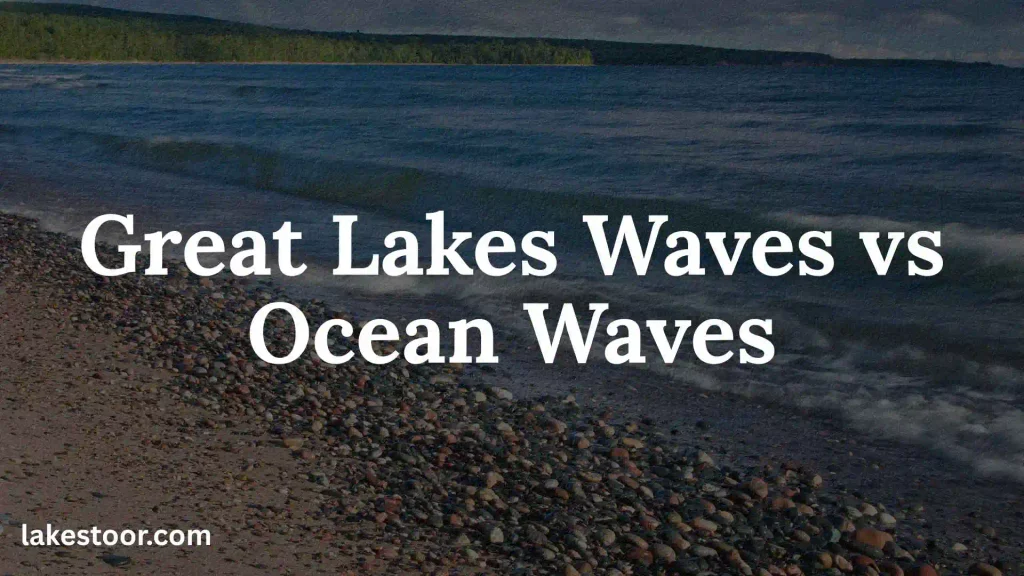
Great Lakes waves can look surprisingly similar to ocean waves, but there are important differences.
The biggest difference is the size of the water body and the available fetch, which is the distance wind can travel over open water. Ocean waves can develop over enormous distances, allowing long-period swells to travel thousands of miles. Great Lakes waves are generally more fetch-limited.
Wind speed, wind duration, and fetch all influence wave development. Strong winds blowing for a long time across a large area of open water can produce much larger waves than short-lived or weak winds.
Great Lakes waves also tend to have shorter periods than many ocean swells. This can make them feel steep and closely spaced, particularly during storms.
For swimmers, the important lesson is simple: freshwater does not mean calm water. Large waves and dangerous currents can develop on the Great Lakes, particularly near beaches, piers, breakwalls, and river outlets.
Great Lakes Waves Forecast
A Great Lakes waves forecast combines information about wind, wave height, wave period, weather systems, and local shoreline conditions.
The National Weather Service provides marine forecasts for individual Great Lakes zones rather than treating each lake as one uniform body of water. Forecast products cover open-lake areas as well as nearshore zones.
For a more detailed picture, NOAA’s Great Lakes Environmental Research Laboratory provides wave-model products based on NCEP WaveWatch III. The system offers wave forecasts for Lake Superior, Lake Michigan, Lake Huron, Lake Erie, Lake Ontario, and the Great Lakes as a whole.
When checking a forecast, pay attention to more than just the number of feet. Wind direction can determine which shoreline receives the largest waves, while wave period can affect how powerful and closely spaced those waves feel.
What Is the Largest Great Lake to Smallest
If you compare the Great Lakes by surface area, their order from largest to smallest is:
| Rank | Great Lake | Approximate surface area |
| 1 | Lake Superior | 31,700 sq mi |
| 2 | Lake Michigan | 22,400 sq mi |
| 3 | Lake Huron | 23,000 sq mi |
| 4 | Lake Erie | 9,910 sq mi |
| 5 | Lake Ontario | 7,340 sq mi |
There is one important detail: Lake Huron is slightly larger than Lake Michigan by surface area, so the correct order is Superior, Huron, Michigan, Erie, Ontario.
Lake Superior is also the deepest and contains the greatest volume of water of the five.
The large surface area of Superior and Huron gives wind considerable room to generate waves, although actual wave size depends on wind conditions and fetch rather than lake size alone.
Great Lakes Wave Forecast by Zone
A Great Lakes wave forecast by zone is more useful than relying on one general forecast for an entire lake.
The National Weather Service divides the Great Lakes into detailed marine forecast zones. Lake Michigan, for example, has separate zones covering different sections of the shoreline and offshore waters. Lake Erie and Lake Ontario are similarly divided into multiple forecast areas.
Nearshore forecasts generally focus on waters within about five nautical miles of shore, while open-lake forecasts cover farther offshore areas.
This matters because a southwest wind might create relatively small waves on one shoreline while producing much larger waves on the opposite side. A forecast for Chicago cannot automatically describe conditions near Traverse City, and a Lake Superior forecast near Duluth may be very different from conditions near Whitefish Point.
For boating or swimming, use the forecast zone closest to your exact destination.
Great Lakes Waves Photography
Great Lakes waves photography can produce dramatic images that look surprisingly similar to coastal ocean photography. Storm clouds, breaking waves, lighthouses, rocky shorelines, ice, and spray can all create strong compositions.
Photographers often look for windy weather because larger waves create more movement and texture. However, storm conditions also create safety concerns, especially near piers, breakwalls, cliffs, and exposed shoreline structures.
A telephoto lens can be useful for photographing large waves from a safe distance. A faster shutter speed helps freeze spray and individual droplets, while slower shutter speeds can emphasize the movement of water.
Sunrise and sunset can add warm light to wave crests, while overcast weather can create a darker, more dramatic atmosphere.
The best Great Lakes wave photograph is not necessarily taken from the water’s edge. A stable viewpoint well away from hazardous waves can provide both a better composition and a safer shooting position.
Great Lakes Waves Height
Great Lakes wave height varies from calm conditions of less than a foot to several feet during ordinary storms, with much larger waves possible during major wind events.
Wave height depends heavily on wind speed, wind duration, fetch, lake shape, and the location being measured. NOAA explains that all three major wind-wave factors—speed, duration, and fetch—work together to determine how large waves can become.
Forecasts also use specific definitions. In National Weather Service marine forecasts, significant wave height represents the average height of the highest one-third of waves in the wave spectrum. Occasional wave height refers to the average of the highest one-tenth.
This means an occasional wave can be noticeably taller than the headline forecast number.
For swimmers, wave height should always be considered together with current risk. NWS research shows that dangerous Great Lakes currents often occur alongside higher wave action.
Frozen Great Lakes Waves
Frozen Great Lakes waves create some of the most unusual winter scenery in the region. Ice can form along shorelines, around rocks, and across portions of the lakes when temperatures remain cold enough.
However, a frozen shoreline does not mean the entire lake is frozen. Great Lakes ice coverage changes considerably from year to year and from lake to lake. NOAA records show that historical maximum ice coverage varies greatly among the five lakes.
During winter storms, waves can continue moving beneath or between areas of ice. Ice formations can also build around shoreline structures as spray freezes in cold weather.
These conditions can create spectacular photographs of frozen spray, ice-covered beaches, and wave-sculpted formations. They can also be dangerous. Thin ice, unstable shelves, freezing spray, and hidden open water make winter shoreline exploration much riskier than it may appear.
Are There Waves in the Great Lakes
Yes, there are waves in all five Great Lakes.
Great Lakes waves are primarily generated by wind blowing across the lake surface. When wind transfers energy to the water, small ripples can grow into larger waves if the wind continues blowing over enough distance.
The largest waves generally develop when strong winds persist over a long stretch of open water. Because the Great Lakes are enormous, some storms can generate powerful waves that resemble ocean surf.
The lakes can also experience dangerous wave-driven currents. National Weather Service research identifies rip currents, structural currents, outlet currents, longshore currents, and channel currents among the current types found in the Great Lakes.
So the idea that lakes cannot have serious waves simply because they are freshwater is a misconception.
How Does Lake Superior Have Waves
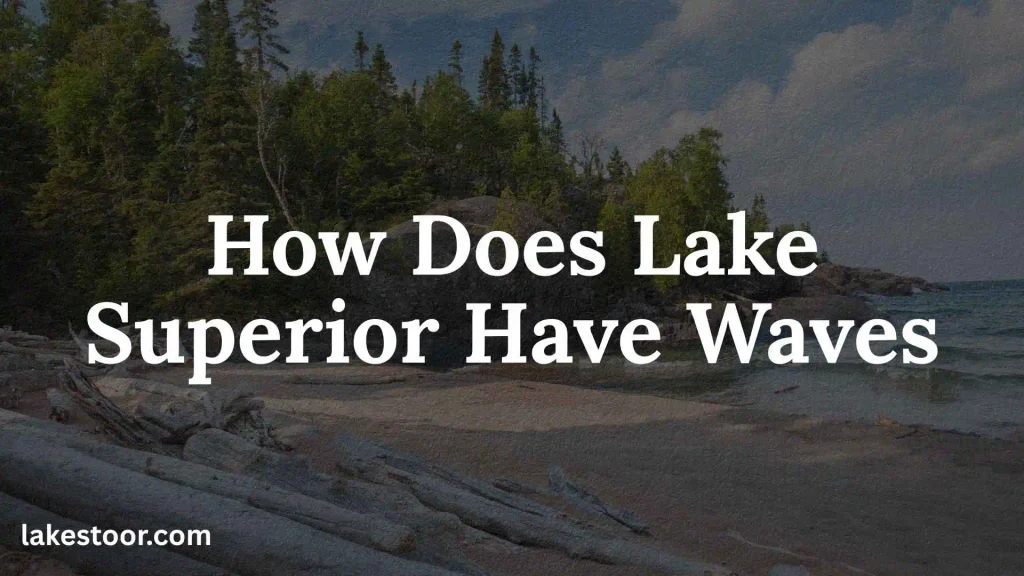
Lake Superior develops waves primarily because of wind blowing across its enormous surface. Its huge size provides long stretches of open water, or fetch, over which wind can transfer energy to the lake.
Lake Superior is the largest, deepest, and coldest of the five Great Lakes.
When a strong storm moves across the region, sustained winds can generate increasingly large waves. The direction and duration of those winds determine which sections of the shoreline experience the strongest wave action.
Lake Superior’s great depth and size also contribute to its ability to generate and sustain substantial wave conditions. Yet the actual height at a particular beach depends on local wind direction, shoreline shape, water depth, and the storm’s position.
This is why one part of Lake Superior can appear relatively calm while another shoreline is experiencing powerful breaking waves.
Do the Great Lakes Have Currents
Yes, the Great Lakes have currents, and some can be dangerous for swimmers.
These currents include rip currents, longshore currents, structural currents, outlet currents, and channel currents. They can develop around beaches, sandbars, piers, breakwalls, river outlets, and other shoreline features.
Currents are closely connected with waves and wind. When waves push water toward a beach, the water has to move somewhere. Under the right conditions, some of it can flow back toward deeper water through narrow channels, creating a strong current.
The Straits of Mackinac are another example of important Great Lakes currents. The straits connect Lake Michigan and Lake Huron, and NOAA research specifically examines the currents moving through this waterway.
For swimmers, never assume that calm-looking water means there is no current. NWS recommends checking beach forecasts and following local warnings, particularly when waves are elevated.
Where Is Great Lakes Waves Located?
Great Lakes waves can be found across thousands of miles of shoreline in the United States and Canada. In the U.S., visitors commonly experience them in Michigan, Wisconsin, Illinois, Indiana, Ohio, Pennsylvania, New York, and Minnesota.
Popular U.S. Great Lakes areas include:
- Lake Michigan beaches near Chicago, Milwaukee, Indiana Dunes, Holland, Ludington, and Traverse City
- Lake Superior shoreline near Duluth, Marquette, Apostle Islands, and Pictured Rocks
- Lake Erie beaches near Cleveland, Erie, Presque Isle, Sandusky, and Buffalo
- Lake Huron shoreline near Mackinaw City, Alpena, and Michigan’s Thumb
- Lake Ontario shoreline near Rochester, Oswego, and Niagara County
For USA travelers from Allentown PA, Lehigh Valley, or eastern Pennsylvania, Lake Erie is often the closest Great Lakes option by road, especially around Erie, Pennsylvania and Presque Isle State Park. Exact drive time depends on traffic, route, season, and lodging location, so visitors should map directions before leaving.
Location matters because each lake behaves differently. Lake Erie is shallower than the other Great Lakes, so it can warm faster, freeze more often, and become choppy quickly during wind events. The Great Lakes Commission notes Lake Erie is the smallest Great Lake by volume and has an average depth of about 62 feet.
History and Background
The Great Lakes have shaped American travel, shipping, fishing, recreation, and regional identity for generations. Long before modern beaches, marinas, wedding venues, and lake resorts, these waters were central to Indigenous communities, trade routes, settlement, and transportation.
The waves themselves are part of that story. Storms on the Great Lakes have influenced lighthouse construction, ship navigation, harbor design, rescue services, and public safety rules. Today, visitors enjoy the beauty of the shoreline, but locals know the water deserves respect.
Wave events can also become extreme. The International Joint Commission explains that seiches and meteotsunamis can affect the Great Lakes under certain weather conditions, and it notes a historic 10-foot Lake Michigan wave in Chicago in 1954 that swept fishermen to their deaths.
Main Experience at Great Lakes Waves
Scenic Views
The biggest reason to experience Great Lakes waves is the view. On calm days, the water can look soft, blue, and peaceful. On windy days, the shoreline becomes dramatic, with whitecaps, rolling surf, and waves breaking against rocks, piers, or lighthouses.
Some of the best wave-viewing spots are beaches, elevated overlooks, lakefront trails, dunes, harbor walls, and lighthouse parks. For safety, stay back from piers, rocks, and breakwalls during rough water.
Lake Activities
Great Lakes waves shape many activities. Gentle waves can make beach days more fun, while rough waves may cancel swimming, kayaking, paddleboarding, or boating plans. Always check local conditions before choosing an activity.
Good lake-day activities include:
- Beach walking
- Picnicking
- Lighthouse photography
- Shore fishing
- Surf watching
- Birding
- Hiking near dunes or bluffs
- Visiting lake towns
- Watching sunset over the water
Boating
Boating on the Great Lakes requires more planning than boating on smaller lakes. Wind, storms, fog, cold water, and wave height can change quickly. Small boats, kayaks, and paddleboards are especially sensitive to wind and waves.
Before boating, check marine forecasts, wave height, wind direction, small craft advisories, marina rules, launch access, and life jacket requirements.
Fishing
Fishing can be excellent around the Great Lakes, but wave conditions matter. Shore anglers should be careful near piers, rocks, breakwalls, and river mouths. Boat anglers should check local marine forecasts and avoid going out when wave conditions exceed their boat size or skill level.
Swimming
Swimming is enjoyable at many Great Lakes beaches, but it should never be treated casually. High waves, structural currents, longshore currents, rip currents, cold water, and sudden drop-offs can create real danger.
The National Weather Service says Great Lakes beach forecasts use swim-risk categories based on high waves and dangerous currents. Swim near lifeguards where available, follow warning flags, and stay out of the water during high-risk conditions.
Photography
Great Lakes waves are popular with photographers because the mood changes so quickly. You can capture soft sunrise reflections, moody storm clouds, lighthouse spray, dune grass, dramatic ice formations, or sunset waves.
Use caution with gear. A photo is not worth stepping onto a slick pier or standing too close to breaking waves.
Family Activities
Families can enjoy beaches, nature centers, picnic areas, playgrounds, short hikes, boat tours, ice cream shops, local diners, and scenic drives. Choose beaches with restrooms, safe access, parking, lifeguards if available, and nearby food.
Things to Do at Great Lakes Waves
Great Lakes waves are not a single attraction, so the best things to do depend on the lake and town you choose. Here are practical options:
Visit a Great Lakes beach. Choose a public beach with posted safety information, parking, restrooms, and clear access. Check swim risk before entering the water.
Walk a lakefront trail. Many cities and parks have paved or natural trails with scenic views. These are great for families, couples, photographers, and travelers who want lake air without swimming.
See a lighthouse. Lighthouses are part of the Great Lakes experience. They are beautiful in calm weather and dramatic during wave events, but rough-water viewing should be done from a safe distance.
Explore dunes and bluffs. Lake Michigan and Lake Superior have especially memorable dune and bluff landscapes. Trails may be sandy, steep, or exposed to wind, so wear proper shoes.
Try freshwater surfing. Surfing exists on the Great Lakes, especially during windy weather. Beginners should go with local guidance and proper cold-water gear when needed.
Plan a lake-town weekend. Many Great Lakes communities offer dining, breweries, farmers markets, beaches, parks, marinas, and boutique lodging.
Go birding or wildlife watching. Shorelines and wetlands around the lakes attract migrating birds and seasonal wildlife.
Book a lake-view stay. Hotels, cabins, resorts, and vacation rentals near the water can cost more in peak season, but the views may be worth it for special trips.
Best Time to Visit Great Lakes Waves
The best time depends on your goal.
Summer is best for beach trips, family vacations, swimming where safe, boat tours, lake-town dining, and outdoor events. It is also the busiest season, so parking and lodging may cost more.
Fall is one of the best seasons for dramatic waves, cooler weather, photography, hiking, and fewer crowds. Windy fall weather can create beautiful but risky shoreline conditions.
Spring can be peaceful, but water is often cold. Some beaches, restaurants, boat services, and restrooms may not be fully open early in the season.
Winter can be stunning for ice, snow, and storm photography, especially on Lake Superior and Lake Michigan. It can also be dangerous because of ice shelves, slick walkways, freezing spray, and severe cold.
Avoid swimming or boating during high waves, storms, lightning, dense fog, or posted beach hazards. Confirm current conditions before traveling because Great Lakes weather can change fast.
Is Great Lakes Waves Good for Families?
Yes, Great Lakes waves can be family-friendly when you choose the right beach or park and plan around safety. Families should look for guarded beaches, gentle access, restrooms, picnic areas, parking, shade, nearby food, and clear warning signs.
Parents should be extra careful because freshwater waves can look less threatening than ocean surf, but currents can still be dangerous. Children should stay within arm’s reach near water, wear life jackets when boating, and avoid piers or breakwalls during rough conditions.
For a low-stress family day, choose a beach with:
- Lifeguards when available
- Posted swim-risk signs
- Restrooms and changing areas
- Easy parking
- Food or picnic space nearby
- A backup activity if swimming is unsafe
- Nearby playgrounds, trails, or visitor centers
Is Great Lakes Waves Good for Couples?

Yes, Great Lakes waves can be excellent for couples. The lakes offer sunset walks, scenic drives, cozy waterfront restaurants, lighthouse photos, boutique hotels, and peaceful beaches.
Couples planning a romantic weekend should compare lake towns based on dining, lodging, walkability, views, and seasonal atmosphere. A quiet fall weekend near Lake Michigan or Lake Superior can feel very different from a busy July beach trip.
For proposals, engagement photos, or anniversary trips, check weather and access first. Wind can create dramatic photos, but it can also make hair, clothing, and tripod setup harder.
Weddings and Events at Great Lakes Waves
Great Lakes waves can make a beautiful backdrop for weddings and events. Lakefront hotels, resorts, golf clubs, yacht clubs, public parks, private estates, and event spaces may offer ceremony areas with water views.
The main appeal is scenery. Waves, sunsets, lighthouses, beaches, and marina views can create a memorable setting. But lakefront events also require planning. Wind, rain, bugs, cold water, uneven ground, seasonal access, parking, and permits can affect the day.
If you are planning a wedding or private event, confirm all details directly with the venue or local authority. Do not rely on old blog posts, screenshots, or third-party listings for pricing, capacity, menus, or rules.
Wedding Planning Questions to Ask
- What ceremony locations are available?
- What is the rain backup plan?
- What is the guest capacity?
- Are food and beverage packages available?
- Are bar packages available?
- Are outside vendors allowed?
- Is parking available?
- Are tables, chairs, linens, and setup included?
- Are there service charges or taxes?
- What is the deposit and cancellation policy?
- Are there photo restrictions?
- Are beach permits required?
- Can guests access the shoreline safely?
- How windy is the ceremony area during typical event months?
- Are restrooms close to the ceremony site?
Dining and Food Options
Dining near Great Lakes waves depends heavily on location. Large lake cities like Chicago, Milwaukee, Cleveland, Detroit, Buffalo, and Duluth offer many restaurants, while smaller beach towns may have seasonal cafés, fish shacks, breweries, ice cream shops, and casual lakefront dining.
Do not assume hours or menus are current. Many waterfront restaurants change hours by season, weather, staffing, and private events. Before driving out of your way, check the restaurant’s official website, social media, or reservation platform.
Good dining options to look for include:
- Lake-view restaurants
- Seafood or local fish spots
- Casual family diners
- Breweries and patios
- Coffee shops near beaches
- Picnic-friendly parks
- Resort or hotel restaurants
How Much Does Great Lakes Waves Cost?
Seeing Great Lakes waves from a public beach, park overlook, or lakefront trail may be free, but your total cost depends on where you go and what you do.
Common cost factors include:
| Cost Item | What to Know |
| Entry fees | Some state parks, national lakeshores, beaches, or recreation areas may charge admission or vehicle fees |
| Parking | City beaches and lakefront areas may have paid parking, meters, permits, or seasonal passes |
| Activities | Boat tours, kayak rentals, surf lessons, fishing charters, and guided tours vary by provider |
| Boat rentals | Prices change by boat type, rental length, fuel, insurance, and season |
| Golf tee times | Lake-area public golf courses and resort courses may use seasonal or dynamic pricing |
| Dining | Waterfront dining often costs more than inland casual restaurants |
| Weddings | Costs vary by venue, guest count, date, catering, bar, rentals, service charges, and taxes |
| Private events | Group packages, room rental, food minimums, and staffing fees may apply |
| Lodging | Lake-view rooms, cabins, and vacation rentals often rise in peak summer and holiday periods |
Always confirm current prices directly with the official source before booking. Fees, parking rules, cancellation policies, and package details can change.
Review Summary: What Visitors Commonly Like
Across Great Lakes destinations, visitors commonly praise the scenery, fresh air, sunsets, beach walks, family-friendly parks, lakefront trails, lighthouses, and relaxing small-town atmosphere. Many travelers also enjoy the variety: one trip can include beaches, restaurants, hiking, boating, shopping, fishing, and photography.
Event guests often appreciate lake-view backdrops and outdoor ceremony settings when weather cooperates. Families tend to value easy beach access, picnic areas, playgrounds, and nearby food. Photographers often love the dramatic mood of waves near lighthouses, dunes, and rocky shorelines.
Balanced review themes also include warnings. Visitors may mention crowded parking, cold water, closed seasonal facilities, rough waves, algae concerns in some areas, bugs, changing weather, or higher summer lodging prices.
Possible Concerns to Check Before Visiting or Booking
Great Lakes waves are beautiful, but they are not always safe or convenient. Check these concerns before visiting:
- Weather and wind forecast
- Beach hazard statements
- Swim-risk level
- Water temperature
- Parking availability
- Seasonal closures
- Restroom access
- Dining hours
- Boat launch conditions
- Private events affecting access
- Water quality advisories
- Algae or beach closure notices
- Pet rules
- Permit rules for weddings or photography
- Cancellation policies for tours, lodging, or events
NOAA provides real-time water level information updated every 6 minutes, which can be useful for understanding changing lake conditions, though visitors should still check local beach and marine forecasts for safety decisions.
Who Should Visit Great Lakes Waves?

Great Lakes waves are a strong fit for:
- Families who want beaches, parks, and easy outdoor activities
- Couples looking for sunset views and lake-town weekends
- Outdoor lovers who enjoy hiking, dunes, fishing, kayaking, and photography
- Photographers who want lighthouses, storm waves, ice, and dramatic skies
- Local visitors planning low-cost day trips
- Tourists building a Midwest or Northeast road trip
- Wedding couples wanting lake-view ceremony backdrops
- Corporate groups looking for scenic retreats or event spaces
- Golfers comparing public golf courses or resort courses near the water
- Diners who enjoy lakefront restaurants and small-town food stops
Who May Not Find It Ideal?
Great Lakes waves may not be ideal for travelers who want guaranteed warm swimming water, calm beaches every day, or predictable tropical weather. The lakes can be cold, windy, foggy, stormy, or too rough for swimming, especially outside peak summer.
They may also be less ideal for visitors who dislike seasonal closures, changing parking rules, or weather-dependent activities. If your trip depends on one activity, such as kayaking or boating, have a backup plan.
Pros and Cons of Great Lakes Waves
Pros
- Beautiful freshwater lake views
- Many family-friendly beaches and parks
- Strong photography appeal
- Great for road trips and lake-town weekends
- Offers boating, fishing, hiking, surfing, and scenic drives
- Good options for couples, weddings, and events
- No saltwater smell or ocean tides in the traditional coastal sense
- Many destinations have nearby dining and lodging
- Excellent sunsets in many west-facing locations
- Strong local attraction value across several states
Cons
- Wave and current conditions can become dangerous
- Water can be cold even when air feels warm
- Summer parking can be crowded or expensive
- Some beaches and restaurants are seasonal
- Weather can change quickly
- Swimming may be restricted during high-risk days
- Lakefront lodging can be costly in peak season
- Bugs, algae, or water quality advisories may affect some visits
- Piers and breakwalls can be unsafe during rough waves
- Event planning requires strong weather backup plans
Tips Before Visiting Great Lakes Waves
For First-Time Visitors
Check the forecast before leaving, not just the night before. Wind direction, wave height, and swim-risk levels can change. Bring layers because lake breezes can feel cooler than inland areas.
For Families
Choose beaches with restrooms, lifeguards if available, easy parking, and backup activities. Keep children away from piers and rocks during rough water. Bring snacks, towels, sunscreen, water shoes, and dry clothes.
For Couples
Plan around sunset, but arrive early for parking. For a quieter date, consider weekday evenings, shoulder season, or smaller lake towns instead of the busiest beaches.
For Event Planners
Ask about wind, rain backup, guest transportation, restrooms, power access, permits, catering rules, insurance, vendor load-in, and noise limits. Lakefront scenery is beautiful, but logistics matter.
For Golfers
Look for public golf courses, resort courses, or private clubs near the lake if you want a full weekend itinerary. Confirm tee times, dress code, cart policies, dining availability, and weather cancellation rules.
For Diners
Do not assume lakefront restaurants are open year-round. Check current menus, hours, reservations, parking, patio availability, and private event closures before going.
For Outdoor Visitors
Wear shoes with grip near rocks or wet paths. Avoid breakwalls and piers during high waves. Bring binoculars, a windbreaker, and a backup indoor stop for stormy weather.
Nearby Alternatives to Compare
Because “great lakes waves” can mean many destinations, compare nearby alternatives before choosing where to go. A family beach day, romantic weekend, fishing trip, wedding, and photography outing may all require different locations.
Compare options based on:
- Location
- Driving distance
- Cost
- Reviews
- Activities
- Parking
- Amenities
- Wedding capacity
- Dining
- Scenery
- Family-friendliness
- Distance from hotels
- Water safety information
- Seasonal access
- Pet rules
For Pennsylvania travelers, compare Lake Erie and Presque Isle with inland lakes, state parks, and Pocono-area water destinations. For Allentown PA and Lehigh Valley readers, Lake Erie offers true Great Lakes scenery, while closer Pennsylvania lakes may be easier for a short weekend.
Great Lakes Waves vs Other Local Options
Great Lakes waves feel different from waves on smaller inland lakes because the water is massive, the fetch is longer, and wind can build serious surf. Compared with local ponds or reservoirs, Great Lakes beaches often offer bigger views, stronger waves, more dramatic weather, and a wider range of lake-town activities.
Compared with ocean beaches, Great Lakes beaches offer freshwater, no salt, and a different regional feel. However, they still require caution. Dangerous currents, high waves, cold water, and sudden storms can happen even without ocean tides.
Compared with resort pools or managed water parks, the Great Lakes feel more natural and scenic, but less controlled. That is part of the appeal and part of the risk.
Suggested Internal Links for Your Website
- Best Great Lakes beaches for families in the USA
- Best Lake Erie beaches near Pennsylvania
- Best things to do near Presque Isle State Park
- Best lake towns in Michigan for weekend trips
- Best wedding venues with lake views in the Great Lakes region
- Best public golf courses near Lake Michigan
- Best family-friendly lakes in Pennsylvania
- Best camping lakes in the Midwest
- Best scenic lake drives in the USA
- Best fishing lakes near Cleveland, Erie, and Buffalo
Suggested Source Links
For current and official planning information, readers should check:
- National Weather Service Great Lakes beach hazards and swim-risk forecasts
- NOAA Great Lakes wave forecast tools and experimental model information
- NOAA real-time water level information
- Great Lakes Commission lake facts and regional background
- International Joint Commission information on seiches and meteotsunamis
Author Note
This guide is written for USA travelers, families, couples, event planners, golfers, diners, and outdoor visitors researching Great Lakes waves as part of a practical trip-planning decision. Because lake conditions, pricing, hours, access rules, and safety alerts can change, always verify current details with official sources, local parks, venues, restaurants, marinas, and weather agencies before traveling or booking.
Last updated: July 6, 2026
Frequently Asked Questions About Great Lakes Waves
What are Great Lakes waves?
Great Lakes waves are wind-driven freshwater waves that form on Lakes Superior, Michigan, Huron, Erie, and Ontario. They can range from gentle ripples to rough surf depending on wind, storms, lake depth, and shoreline shape.
Are Great Lakes waves dangerous?
They can be. High waves, cold water, rip currents, structural currents, and longshore currents can create dangerous swimming conditions. Always check local beach forecasts and warning signs before entering the water.
Which Great Lake has the biggest waves?
Large waves can happen on any Great Lake, but Lake Superior and Lake Michigan are especially known for powerful storm waves. Actual wave size depends on weather, wind direction, fetch, and location.
Can you swim when there are Great Lakes waves?
Sometimes, but only when conditions are safe. Swim near lifeguards where available, follow posted warnings, and stay out of the water during high swim-risk days.
Do the Great Lakes have rip currents?
Yes, dangerous currents can occur on the Great Lakes. The National Weather Service includes dangerous-current risk in Great Lakes beach forecasts.
Are Great Lakes waves good for surfing?
Yes, freshwater surfing is possible on the Great Lakes, especially during windy fall, winter, and spring conditions. Beginners should use proper gear and learn from experienced local surfers.
What is the best time to see big Great Lakes waves?
Fall and stormy weather often bring more dramatic waves. Winter can also create powerful scenes, but conditions may be icy and dangerous.
What should I check before visiting a Great Lakes beach?
Check weather, wind, wave height, swim-risk level, water temperature, parking, restrooms, beach rules, water quality, and seasonal closures.
Are Great Lakes waves good for kids?
They can be fun for kids when conditions are calm and the beach is family-friendly. Choose guarded beaches when possible and keep children away from rough water, piers, and breakwalls.
Do Great Lakes beaches have parking?
Many do, but parking varies by city, park, beach, and season. Some areas may charge fees or fill early during summer weekends.
Are Great Lakes waves free to see?
Often yes, especially from public beaches, parks, and overlooks. However, some parks, beaches, parking areas, boat launches, and attractions may charge fees.
Can I plan a wedding near Great Lakes waves?
Yes, many lakefront venues, parks, resorts, hotels, golf clubs, and private event spaces offer Great Lakes views. Confirm permits, capacity, catering, weather backup, and shoreline access before booking.
Are there restaurants near Great Lakes wave-viewing spots?
Many popular lake towns have restaurants, cafés, breweries, and waterfront dining. Hours and menus can be seasonal, so check current details before visiting.
Are Great Lakes waves like ocean waves?
They can look and feel ocean-like, especially during windy weather, but they are freshwater waves. The safety risks are still real, even without saltwater.
Which Great Lakes destination is best for Pennsylvania travelers?
Lake Erie is often the most practical Great Lakes option for many Pennsylvania travelers. Presque Isle and the Erie area are popular choices, but visitors should compare drive time, lodging, parking, beach rules, and weather.
Can wave conditions change during the same day?
Yes. Wind shifts, storms, and weather fronts can change conditions quickly. Check updates close to your visit time.
Where can I find Great Lakes wave forecasts?
NOAA and the National Weather Service provide Great Lakes weather, wave, marine, and beach hazard information. NOAA’s experimental Great Lakes wave model provides 3-day wave-height forecasts.
Final Thoughts
Great Lakes waves are one of the most memorable parts of visiting America’s freshwater coast. They can be peaceful, dramatic, romantic, family-friendly, and deeply scenic, often in the same weekend.
They are worth planning around if you enjoy lake views, outdoor activities, photography, beach towns, fishing, boating, dining, or lakefront events. The key is to respect the water. Check current forecasts, confirm local access and pricing, and choose a destination that matches your travel style.
For families, look for safe beaches and easy amenities. For couples, plan around sunsets and quieter lake towns. For event planners, focus on weather backup and guest comfort. For outdoor visitors, treat waves, wind, and currents seriously.
With the right planning, Great Lakes waves can turn a simple trip into a beautiful USA lake guide experience filled with fresh air, scenic views, local attractions, and lasting memories.

I’m Charlotte Pembroke, and my passion for lakes began through travelling across the United Kingdom’s national parks. I enjoy learning about freshwater ecosystems, famous lakes, conservation, and the unique stories behind these incredible places.
I write to make geography and nature enjoyable for everyone, combining reliable research with clear explanations that readers of all ages can understand.
Books I’ve Written:
- Lakes of Britain: A Natural Journey
- Waters That Shaped History
 Henry Ashford