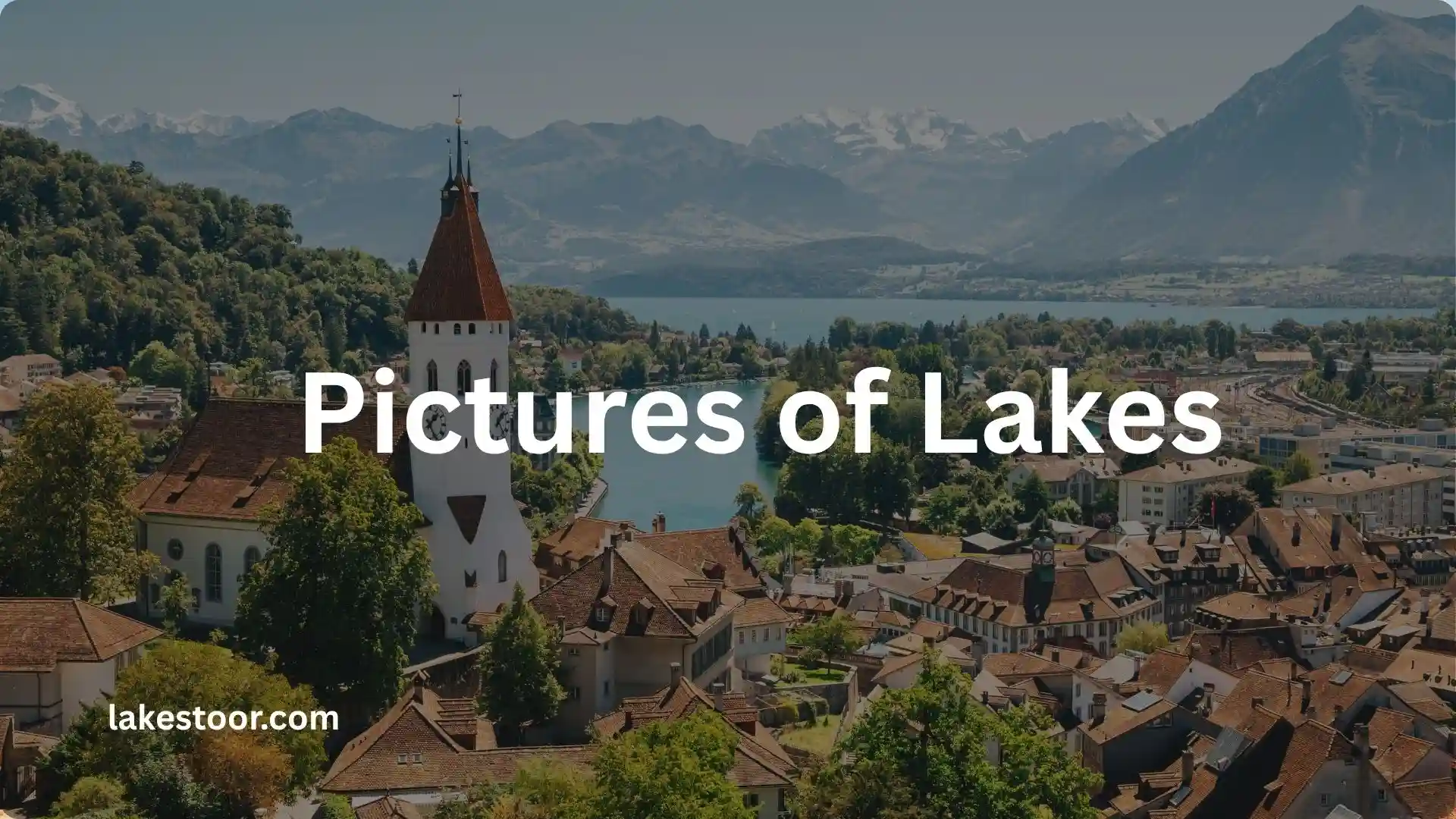
Pictures of lakes let you explore some of the most peaceful and spectacular landscapes in nature. From crystal-clear alpine water and snow-covered mountain lakes to colorful sunsets, autumn reflections, forests, waterfalls, and wildlife, lake photography offers an enormous variety of scenery.
People searching for pictures of lakes may simply want beautiful images, while others may be looking for HD lake pictures, wallpapers, travel inspiration, photography ideas, educational images, or pictures they can legally use online.
This guide covers the major types of lake pictures, ideas for finding high-quality images, photography tips, image licensing, and practical image SEO recommendations for publishers.
Beautiful Pictures of Lakes
Beautiful lake pictures can show much more than water. The surrounding landscape often creates the visual character of the photograph.
A scenic lake image might include:
- Mountains reflected in calm water
- Green forests surrounding the shoreline
- Colorful sunset skies
- Snow and ice
- Wildflowers near the water
- Boats and kayaks
- Waterfalls flowing into a lake
- Wildlife near the shoreline
- Rocks and beaches
- Fog over the water
- Aerial views of large lakes
- Clear turquoise or blue water
The best images usually combine the lake with interesting natural features, creating depth and a strong sense of place.
Types of Lake Pictures to Explore
There is no single type of lake photograph. Different landscapes, seasons, weather conditions, and perspectives can create completely different images.
Mountain Lake Pictures
Mountain lakes are among the most recognizable subjects in landscape photography.
A typical mountain lake photograph may feature clear water in the foreground and dramatic peaks in the distance. Snow-covered mountains, pine forests, rocky shorelines, and clouds can add additional layers to the composition.
Early morning is particularly attractive because calm water can create reflections of the surrounding mountains.
Lake Pictures at Sunset
Sunset is one of the most popular times to photograph a lake.
The sky may change through shades of yellow, orange, pink, red, or purple. When the water is calm, these colors can be reflected across the surface.
For a more dramatic composition, photographers may include:
- A tree silhouette
- A boat
- Rocks along the shoreline
- Mountains
- A person watching the sunset
- Reflections in the water
Lake Pictures at Sunrise
Sunrise provides a different mood from sunset. The light is often softer, and early-morning conditions can produce mist and calm water.
Sunrise lake pictures can be particularly appealing when the landscape includes mountains or forests that catch the first light of the day.
Clear-Water Lake Pictures
Clear lakes can display beautiful blue, green, or turquoise colors.
Photographs taken from above or near the shoreline can sometimes reveal rocks, sand, submerged vegetation, or changes in water depth.
The apparent color of a lake depends on factors such as depth, particles in the water, surrounding geology, vegetation, weather, and lighting. Therefore, photographs should not automatically be treated as evidence of a lake’s permanent water color.
Forest Lake Pictures
Forested lakes provide a peaceful and natural appearance.
Trees can frame the shoreline while their reflections appear in calm water. In autumn, the same landscape can become dramatically more colorful as leaves change.
Forest lake photography is particularly useful for nature-themed backgrounds and seasonal collections.
Autumn Lake Pictures
Autumn can transform a lake landscape.
Yellow, orange, red, and brown foliage can surround the water, while reflections create additional color across the lake surface.
For the strongest autumn photographs, consider combining the colorful shoreline with calm water and a visible background such as mountains or hills.
Winter and Frozen Lake Pictures
Frozen lakes offer a completely different photographic style.
Winter images may feature:
- Ice-covered water
- Snow-covered mountains
- Frost-covered trees
- Ice patterns
- Winter fog
- Snowy shorelines
- People skating where permitted
- Wildlife tracks
Always follow local safety rules around frozen water. Ice that appears solid in a photograph may not be safe to walk on.
Tropical Lake Pictures
Tropical and warm-climate lakes can feature lush vegetation, bright skies, palm trees, volcanic landscapes, or unusually clear water.
These images often have a more vibrant appearance than winter or alpine lake photography.
Lake Pictures With Waterfalls
A waterfall flowing into or near a lake can make an already scenic image more dynamic.
The combination of moving water and still lake water creates contrast. Long-exposure photography can also give waterfalls a soft, flowing appearance.
Lake Pictures With Wildlife
Lakes support many types of wildlife, making them excellent subjects for nature photography.
Depending on the location, photographs may include:
- Ducks
- Geese
- Swans
- Fish
- Eagles
- Herons
- Deer
- Beavers
- Frogs
- Other native species
Wildlife should be photographed responsibly without disturbing animals or entering restricted habitats.
Aerial Lake Pictures
Aerial photographs provide a completely different perspective.
From above, you may see the shape of a lake, surrounding forests, islands, rivers, beaches, roads, and mountains.
Aerial views are especially useful for showing the scale and geography of large lakes.
Pictures of Famous Lakes
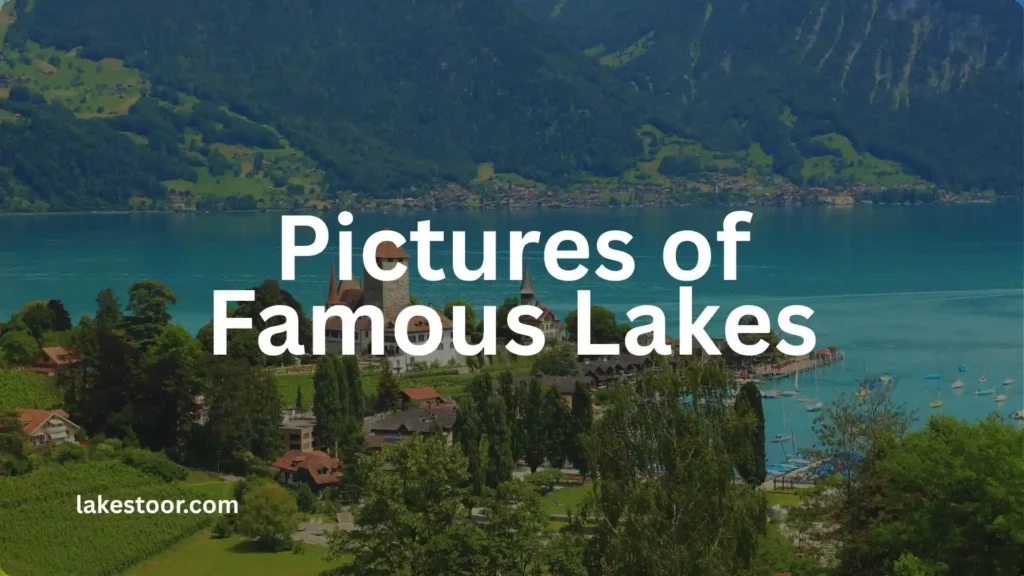
Some lakes are particularly popular subjects because of their scenery, cultural importance, or geographical significance.
Examples include:
- Lake Tahoe in the United States
- Lake Superior in North America
- Lake Michigan in the United States
- Lake Como in Italy
- Lake Geneva in Switzerland and France
- Lake Louise in Canada
- Lake Bled in Slovenia
- Lake Baikal in Russia
- Lake Victoria in Africa
- Crater Lake in Oregon
- Lake Tekapo in New Zealand
When publishing photographs of famous lakes, adding the exact location and useful contextual information makes the page more valuable than simply labeling every image “beautiful lake.”
HD Pictures of Lakes
People searching for HD pictures of lakes usually want large, sharp images suitable for screens or high-quality viewing.
Before choosing an HD lake image, consider:
- Image resolution
- Aspect ratio
- File size
- Orientation
- Copyright status
- Intended screen or print size
A photograph can have a large pixel count but still look poor if it is heavily compressed or out of focus.
For websites, however, the largest possible file is not always the best choice. Deliver an appropriately sized image so visitors do not have to download unnecessarily large files.
Lake Pictures for Wallpapers
Lake landscapes are popular wallpaper subjects because they can create a calm and visually uncluttered background.
Desktop Lake Wallpapers
Wide landscape photographs generally work well for desktop monitors.
Mountain lakes, sunsets, forests, and panoramic views can provide attractive backgrounds.
Phone Lake Wallpapers
Vertical images are usually better suited to smartphones.
A photographer can also crop a landscape image carefully to create a vertical composition, but important subjects should not be placed too close to the edges.
Minimal Lake Wallpapers
For a cleaner background, look for photographs with:
- Calm water
- Simple horizons
- Soft colors
- Large areas of sky
- Minimal objects
- Subtle reflections
These images can work particularly well behind desktop icons or phone app icons.
Free Pictures of Lakes
“Free” does not automatically mean that an image can be used for any purpose.
Before downloading or publishing a photograph, check its license.
Important questions include:
- Can the image be used commercially?
- Is attribution required?
- Can the image be modified?
- Can it be redistributed?
- Are there restrictions on using it as part of a product?
- Does the photographer retain copyright?
If the license is unclear, do not assume that the photograph is free to republish.
Copyright and Licensing for Lake Pictures
Photographs are generally protected by copyright, even when they are publicly available online.
Simply finding an image through Google Images does not mean you have permission to copy it.
If you want to use someone else’s lake photograph, look for clear licensing information or obtain permission from the copyright holder.
For a website, keeping a record of the source and license can also make image management easier.
Public Domain Images
Some images may be in the public domain, depending on the work and applicable law.
However, you should still verify the source and status rather than assuming that every old or widely shared photograph is public domain.
Creative Commons Images
Some photographers release images under Creative Commons licenses.
Different licenses can have different requirements, including attribution or restrictions on commercial use and modification.
Always read the specific license associated with the image.
Original Photography
Using your own photographs eliminates many third-party licensing concerns and can make your website more distinctive.
Original images can also provide first-hand information about where and how the photograph was captured.
What Makes a Great Lake Picture?
A beautiful lake photograph usually combines several visual elements.
Lighting
Lighting influences color, contrast, shadows, and mood.
Golden-hour light can create warm tones, while cloudy conditions can produce softer and more evenly distributed light.
Reflection
A calm lake can mirror mountains, trees, clouds, and the sky.
Reflections can create symmetry and make the landscape feel deeper.
Composition
Composition determines how the viewer’s eye moves through the photograph.
Useful elements can include:
- Shorelines
- Leading lines
- Foreground rocks
- Trees
- Mountains
- Boats
- Paths
- Reflections
Perspective
Changing your position can completely alter an image.
A photograph taken from the shoreline may emphasize reflections, while a higher viewpoint may reveal the lake’s shape and surrounding landscape.
Weather
Fog, clouds, rain, snow, and sunlight can all create different moods.
Do not assume that clear skies are always best. Dramatic weather can produce some of the most memorable landscape photographs.
Best Time to Take Pictures of Lakes
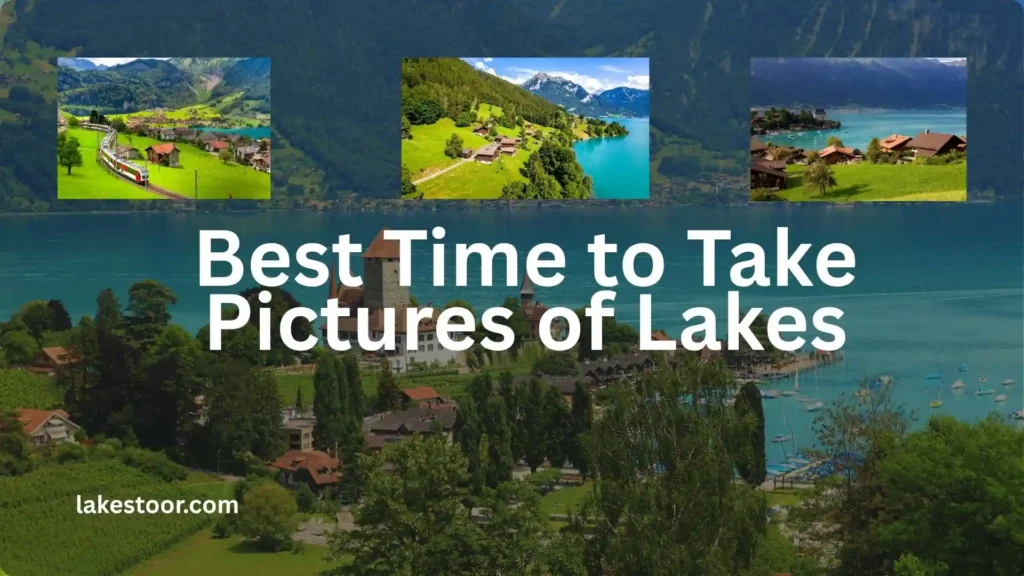
The best time depends on the desired result.
Early Morning
Morning can provide:
- Calm water
- Soft light
- Mist
- Fewer visitors
- Cool colors
Golden Hour
Golden hour occurs around sunrise and sunset and provides warm, directional light.
It can make mountains, trees, rocks, and shorelines appear more dimensional.
Blue Hour
Blue hour occurs around twilight and produces cooler tones.
It can be particularly effective for peaceful lake scenes.
After Rain
Rain can produce dramatic clouds and reflections. It can also make vegetation appear fresh and saturated.
Different Seasons
Each season offers a different visual experience:
Spring: Fresh greenery and flowers.
Summer: Bright landscapes and clear skies.
Autumn: Colorful foliage and reflections.
Winter: Snow, ice, and minimalist scenery.
Lake Photography Tips for Beginners
You do not need expensive equipment to take attractive lake pictures.
Use a Strong Foreground
Adding rocks, plants, flowers, or another foreground element can create depth.
Keep the Horizon Straight
A tilted horizon can make a landscape appear unbalanced.
Use your camera’s grid or level feature when available.
Look for Reflections
When the water is calm, check whether mountains, trees, or clouds are reflected on the surface.
Try Different Angles
Take several photographs from different positions rather than relying on a single viewpoint.
Avoid Overediting
Strong saturation and excessive sharpening can make nature photographs look unnatural.
Aim to preserve realistic colors unless you intentionally want a creative style.
Photograph Responsibly
Stay on designated paths when required, respect wildlife, follow park rules, and avoid damaging vegetation or sensitive environments to get a photograph.
How to Choose the Right Lake Picture
The best photograph depends on what you plan to do with it.
| Purpose | Useful Image Characteristics |
| Phone wallpaper | Vertical, high-resolution image |
| Desktop wallpaper | Wide landscape composition |
| Travel article | Location-specific photograph |
| School project | Clearly labeled and relevant image |
| Photography inspiration | Strong composition and lighting |
| Website article | Relevant, optimized image |
| Social media | Platform-appropriate aspect ratio |
| Sufficient resolution for the intended size |
How to Create a Better Lake Picture Gallery
A useful gallery should make it easy for visitors to find what they want.
Instead of presenting hundreds of unrelated images, organize them into categories.
For example:
By Landscape
- Mountain lakes
- Forest lakes
- Coastal lakes
- Alpine lakes
- Desert lakes
- Tropical lakes
By Season
- Spring lake pictures
- Summer lake pictures
- Autumn lake pictures
- Winter lake pictures
By Time of Day
- Sunrise
- Daytime
- Sunset
- Twilight
- Night
By Subject
- Lakes with mountains
- Lakes with boats
- Lakes with waterfalls
- Lakes with wildlife
- Lakes with flowers
- Lakes with reflections
This structure helps visitors browse efficiently and creates clearer topical organization.
How to Optimize Pictures of Lakes for Google Images
If you publish lake photographs, image optimization is an important part of technical SEO.
Google explains that image search relies on information from the image itself as well as the surrounding page content.
Use Descriptive Image File Names
Avoid meaningless filenames such as:
DSC_12345.jpg
A more descriptive filename could be:
mountain-lake-sunset.jpg
The filename should accurately describe the image rather than becoming a list of keywords.
Write Natural Alt Text
Alt text should describe what is actually visible.
Good:
Snow-covered mountains reflected in a calm alpine lake
Poor:
pictures of lakes beautiful lake pictures lake images HD lake photos
The second example is keyword stuffing rather than useful image description.
Use Relevant Captions
When a caption adds useful information, identify the location, subject, or photographic context.
For example:
Lake Louise surrounded by mountains in Banff National Park, Alberta.
Do not add invented information simply to make an image appear more authoritative.
Place Images Near Relevant Content
A photograph of an alpine lake should appear alongside content discussing that lake or alpine landscapes.
The surrounding text helps provide context.
Use Responsive Images
A visitor on a phone does not necessarily need the same image dimensions as someone viewing a large desktop screen.
Responsive image techniques can help deliver appropriate versions for different devices.
Use Modern Image Formats When Appropriate
WebP and AVIF can provide efficient compression for many web images.
However, format choice should consider browser support, image quality, workflow, and the needs of your website.
Compress Images
Large photographs can significantly increase page weight.
Compression can reduce file size while maintaining acceptable visual quality.
The goal is not simply to make an image as small as possible; it is to achieve a good balance between quality and performance.
SEO Mistakes to Avoid With Lake Images
Avoid these common mistakes:
- Stuffing keywords into alt text
- Using irrelevant images just to target a keyword
- Copying copyrighted photographs without permission
- Uploading extremely large files
- Using vague filenames for every image
- Adding misleading captions
- Publishing dozens of nearly identical photographs
- Using low-quality or blurry images
- Hiding important information inside images
- Creating image galleries without useful context
A page should be created for visitors first rather than simply trying to generate image-search traffic.
How Lake Pictures Can Support a Helpful Article
A page targeting pictures of lakes should not be only a wall of images.
Useful supporting content can answer questions such as:
- What type of lake is shown?
- Where is it located?
- What makes the landscape unusual?
- What season was the photograph taken?
- What is the best time to photograph it?
- Can visitors travel there?
- Is the image available for reuse?
- What resolution is available?
- Is the photograph suitable for a phone or desktop wallpaper?
This additional context makes the page more useful to people with different search intentions.
Lake Pictures for Travel Inspiration
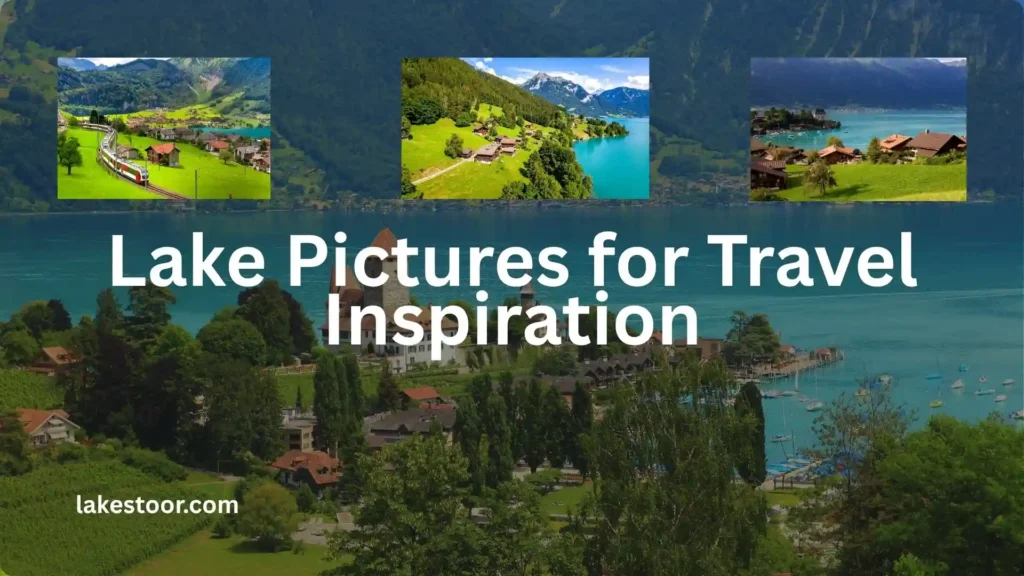
Lake photographs can help travelers decide where they want to visit.
A travel-focused lake page can include:
- Location
- Nearby towns
- Best seasons
- Major viewpoints
- Hiking opportunities
- Photography locations
- Weather considerations
- Nearby attractions
- Local rules
- Safety information
However, information such as opening hours, access restrictions, road conditions, and local regulations should be checked against current official sources because these details can change.
Lake Pictures for School Projects
Students may search for lake pictures for geography, environmental science, biology, or art projects.
A useful educational image should include enough context to understand what is being shown.
For example, instead of labeling an image only “lake,” a caption might identify the lake’s name, country, surrounding ecosystem, or geographical feature when those details are verified.
Lake Pictures for Social Media
Lake photography is also popular for social media because landscapes can communicate travel, relaxation, adventure, and nature.
When preparing an image for social platforms, consider:
- Vertical formats for mobile viewing
- Clear focal points
- Strong lighting
- Readable composition
- Appropriate cropping
- Accurate location information
Do not remove important geographic context merely to make an image fit a trend.
Frequently Asked Questions About Pictures of Lakes
Where can I find beautiful pictures of lakes?
You can find lake photographs through photography websites, travel publications, image libraries, public-domain collections, and image-search services. Always check the licensing terms before reusing an image.
What are the most popular pictures of lakes?
Popular categories include mountain lakes, sunset lakes, turquoise-water lakes, forest lakes, autumn lakes, frozen lakes, lakes with waterfalls, and scenic lakes surrounded by mountains.
Where can I find HD pictures of lakes?
Look for reputable photography and image-library websites that provide high-resolution downloads. Check the image’s dimensions and license before using it.
Can I use pictures of lakes from Google Images?
Not automatically. Google Images is a search service, not a blanket license for photographs. You need to check the copyright and usage rights of the original image.
What is the best lake picture for a wallpaper?
For desktop wallpapers, wide landscape photographs generally work well. For phones, vertical photographs are usually more practical.
What makes lake water look blue in pictures?
Water can appear blue because of the interaction of light with the water and its surroundings, along with factors such as depth, particles, reflected sky, and the composition of the surrounding landscape.
What is the best time to photograph a lake?
Early morning and golden hour are often excellent choices, but the best time depends on the desired lighting, weather, reflections, and landscape.
How do I write alt text for a lake image?
Describe the important visible elements naturally. For example: “calm mountain lake reflecting snow-covered peaks.”
Should I put “pictures of lakes” in every image alt tag?
No. Each alt attribute should describe the individual image. Repeating the same keyword across every image can make descriptions unnatural and may be considered keyword stuffing.
Can original lake photographs help a website?
Yes. Original photographs can provide unique visual value and first-hand context, particularly when accompanied by accurate information about where, when, and how the images were created.
Final Thoughts
Pictures of lakes cover an enormous range of visual experiences, from peaceful forest ponds and colorful sunsets to dramatic mountain landscapes, clear turquoise water, frozen lakes, waterfalls, wildlife, and aerial views.
If you are simply browsing, organizing lake photographs by landscape, season, subject, and time of day can make the experience much easier. If you need an image for a website, wallpaper, school project, or commercial purpose, resolution and licensing are equally important.
For website owners, the strongest approach is to combine high-quality relevant images with useful original information. Descriptive filenames, natural alt text, meaningful captions, optimized image files, responsive images, and relevant surrounding content can help search engines understand your photographs while also creating a better experience for visitors.
Most importantly, don’t build a page around the keyword alone. Build a genuinely useful resource where someone searching for pictures of lakes can quickly discover beautiful images, understand what they are seeing, and find the exact type of lake picture they need.
Also Check This Post:Lakes in Illinois: 20 Best Lakes to Visit, Swim, Fish, and Explore
Also Check This Post:Lakes in Switzerland: 15 Best Lakes to Visit, Things to Do & Travel Tips

Hi, I’m Henry Ashford, a writer with a lifelong interest in lakes, landscapes, and the natural environment. I love exploring how lakes influence wildlife, local communities, tourism, and history. My goal is to create informative content that encourages readers to appreciate and protect freshwater environments.
Every article I write is based on careful research and presented in a straightforward, engaging style that makes learning enjoyable.
Books I’ve Written:
- Discovering the World’s Great Lakes
- Freshwater Landscapes: Stories from Around the Globe
 Charlotte Pembroke