Joffre Lakes Provincial Park is one of British Columbia’s most recognizable mountain destinations, known for its turquoise-blue glacial lakes, rugged peaks, old-growth forests, and views toward Matier Glacier and Joffre Peak. Located along Duffey Lake Road east of Pemberton, the park offers a trail connecting Lower, Middle, and Upper Joffre Lakes.
The scenery is spectacular, but Joffre Lakes is not simply a quick roadside attraction. The trail becomes progressively steeper and rougher, visitor numbers are managed during the busiest season, parking is restricted, cell service is unavailable, and mountain weather can change quickly.
If you are planning a visit, this guide covers what you actually need to know: how to get there, how difficult the hike is, how long to allow, parking, day-use passes, camping, seasonal conditions, what to bring, safety, swimming, pets, photography, and common questions.
Joffre Lakes Provincial Park at a Glance
| Detail | Information |
| Location | East of Pemberton, British Columbia |
| Road | Duffey Lake Road / Highway 99 |
| Main attractions | Lower, Middle, and Upper Joffre Lakes |
| Trail elevation gain | Approximately 400 m to Upper Joffre Lake |
| Lower Lake | About a 5-minute walk from the parking lot |
| Camping | Upper Joffre Lake Campground |
| Day-use pass | Required during the 2026 peak season |
| 2026 pass period | May 11–October 25 |
| Daily visitor management | 500 visitors per day |
| Drinking water | Not available |
| Cell service | Not available in the park |
| Pets | Not allowed |
| Campfires | Permanently prohibited |
| Swimming | Not recommended |
BC Parks describes Joffre Lakes as a popular destination with three turquoise lakes, jagged peaks, icefields, and cold rushing streams. The elevation gain from the parking lot to Upper Joffre Lake is approximately 400 metres.
Joffre Lakes Provincial Park Weather
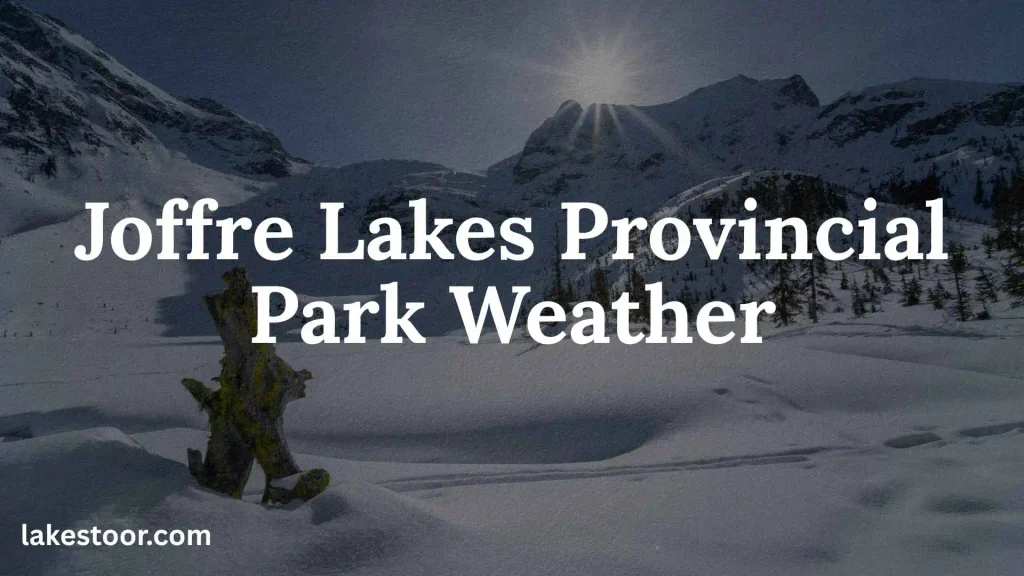
Joffre Lakes Provincial Park ka weather mountain environment ki wajah se quickly change ho sakta hai. Summer mein pleasant conditions mil sakti hain, lekin higher elevations par temperature lower ho sakta hai. Rain, clouds, wind aur sudden weather changes bhi hiking experience ko affect kar sakte hain.
Winter aur spring mein snow, ice aur slippery trail conditions common hoti hain. Hike se pehle weather forecast aur current trail conditions check karna important hai. Visitors ko season ke according waterproof clothing, warm layers aur suitable hiking shoes carry karne chahiye.
Joffre Lakes Provincial Park Photos
Joffre Lakes Provincial Park photos ke liye sabse popular views Lower Joffre Lake, Middle Joffre Lake aur Upper Joffre Lake ke hain. Turquoise-colored water, forest trails, rocky mountains aur surrounding peaks park ko excellent photography destination banate hain.
Lakes ka beautiful blue-green color glacial rock flour ki wajah se develop hota hai. Ye fine particles glacier se originate hote hain aur water mein suspended reh kar sunlight ko reflect karte hain.
Agar aap photos capture karna chahte hain, to different viewpoints se lake, mountains aur trail ko frame karna useful hota hai. Early morning mein light aur relatively quieter conditions photography ke liye helpful ho sakti hain.
Joffre Lakes Day Pass
Joffre Lakes Provincial Park mein busy season ke dauran visitors ko day-use pass ki requirement ho sakti hai. 2026 season ke liye day-use passes May 11 se October 25 tak required hain.
Pass free hota hai, lekin visitors ko apni visit se pehle required pass obtain karna hota hai. Peak season mein visitor numbers manage karne ke liye reservation system use kiya jata hai.
Day trip plan karte waqt pass ke saath weather, parking, trail conditions aur travel time ko bhi consider karna chahiye. Pass mil jana safe trail conditions ki guarantee nahi hota, isliye trip se pehle current park information check karna important hai.
Joffre Lakes Provincial Park Trails
Joffre Lakes Provincial Park ka main hiking trail visitors ko Lower, Middle aur Upper Joffre Lakes tak le jata hai. Trail forested areas, rocky sections aur elevation gain se guzarta hai, isliye proper footwear aur sufficient water important hain.
Lower Joffre Lake relatively easy access point provide karta hai, jabki Middle aur Upper lakes tak jaane ke liye additional uphill hiking karni padti hai. Upper Joffre Lake tak trail mein noticeable elevation gain hota hai.
Trail conditions season ke according change ho sakti hain. Summer mein muddy ya wet sections mil sakte hain, jabki winter mein snow aur ice trail ko considerably more difficult bana sakte hain.
Joffre Lakes Provincial Park Pass
Joffre Lakes Provincial Park pass aur camping reservation ko ek hi cheez nahi samajhna chahiye. Day visitors ke liye designated season mein day-use pass required hota hai, jabki overnight visitors ko camping reservation ki zarurat hoti hai.
Day-use pass visitors ki daily number management mein help karta hai. Is system ka purpose busy periods mein trail aur surrounding environment par visitor pressure ko manage karna hai.
Trip se pehle pass ki date, number of visitors aur park requirements carefully check karna better hai. Pass ko kisi different date ya location ke liye automatically valid nahi samajhna chahiye.
Joffre Lakes Provincial Park Camping
Joffre Lakes Provincial Park mein overnight camping designated campground area mein hoti hai. Upper Joffre Lake ke paas camping experience visitors ko mountain environment ke close rehne ka opportunity deta hai.
Camping ke liye advance reservation important hai, especially busy summer months mein. Visitors ko tent, sleeping equipment, food storage supplies aur suitable outdoor clothing ke saath prepare hona chahiye.
Park environment ko protect karne ke liye campers ko garbage pack out karna, food properly store karna aur designated camping areas ka use karna chahiye. Campfires allowed nahi hote, isliye cooking ke liye appropriate portable stove use karna zaroori hai.
Joffre Lakes Provincial Park Winter
Joffre Lakes Provincial Park winter mein snow-covered mountains aur frozen landscape ki wajah se completely different appearance deta hai. Winter photography aur snow activities ke liye area attractive ho sakta hai, lekin conditions summer hiking se kaafi different hoti hain.
Snow, ice aur slippery surfaces hiking ko challenging bana sakte hain. Kuch sections mein snowshoes, traction devices ya other winter equipment ki zarurat ho sakti hai.
Mountain areas mein avalanche danger bhi ho sakta hai. Winter visit se pehle weather, snow conditions aur avalanche information check karna essential hai. Beginners ko unfamiliar winter terrain par unnecessary risk lene se bachna chahiye.
Joffre Lakes Provincial Park Reviews
Joffre Lakes Provincial Park reviews mein commonly lake views, turquoise water, mountain scenery aur hiking experience discuss kiya jata hai. Lekin visitor experience season, weather, crowds aur trail conditions ke according change ho sakta hai.
Summer weekends generally busy ho sakte hain, jabki weather changes trail experience ko significantly affect kar sakte hain. Isliye sirf reviews dekh kar trip plan karne ke bajaye current conditions bhi check karni chahiye.
Reviews ko compare karte waqt trail difficulty, parking, crowd levels, weather, camping aur photography opportunities jaise factors par attention dena useful hai.
Joffre Lakes Provincial Park Hotels
Joffre Lakes Provincial Park ke andar traditional hotels nahi hain. Visitors jo overnight hotel stay prefer karte hain, woh nearby communities mein accommodation search kar sakte hain.
Pemberton area park ke relatively convenient nearby locations mein se ek hai. Hotel choose karte waqt sirf distance nahi, balki morning travel time, seasonal road conditions aur parking arrangements bhi consider karne chahiye.
Agar aap camping experience prefer karte hain, to park ka designated campground alternative provide karta hai. Hotel aur camping ke beech choice mainly comfort, equipment aur trip style par depend karti hai.
Joffre Lakes Provincial Park British Columbia
Joffre Lakes Provincial Park British Columbia ke Coast Mountains region mein located ek popular outdoor destination hai. Park mein teen major lakes—Lower Joffre Lake, Middle Joffre Lake aur Upper Joffre Lake—hiking route ke along milte hain.
Park ka landscape turquoise lakes, dense forest, rocky terrain aur mountain peaks ka combination create karta hai. Ye combination hiking, landscape photography aur nature exploration ke liye attractive environment banata hai.
Park ka Indigenous cultural context bhi important hai. Visitors ko area ki natural beauty ke saath Indigenous history aur cultural significance ka respect karna chahiye.
BC Parks Joffre Lakes Provincial Park Official
BC Parks Joffre Lakes Provincial Park ke liye official source hai jahan visitors ko park rules, current advisories, day-use requirements, camping information aur seasonal conditions ke baare mein updated information mil sakti hai.
Joffre Lakes jaise popular destination ke liye official information check karna especially important hai kyunki pass requirements, seasonal closures, trail conditions aur visitor management rules time ke saath change ho sakte hain.
Trip se pehle official park information check karne se visitors ko outdated information par depend karne se bachne mein help milti hai.
Lake Joffre Canada
“Lake Joffre Canada” search karne wale log generally Joffre Lakes destination ko refer karte hain. Joffre Lakes ek single lake ke bajaye teen connected mountain lakes ka group hai.
In lakes ke names Lower Joffre Lake, Middle Joffre Lake aur Upper Joffre Lake hain. Inka turquoise color glacial rock flour ki presence ki wajah se especially noticeable hota hai.
Mountain scenery aur bright-colored water Joffre Lakes ko British Columbia ke recognizable hiking destinations mein include karte hain.
Joffree Lakes Reservation
“Joffree Lakes reservation” commonly Joffre Lakes ke day-use pass ya overnight camping reservation ko refer karta hai. Dono requirements ko separate samajhna important hai.
Day visitors ko applicable season mein day-use pass lena hota hai, jabki overnight campers ko designated campground ke liye reservation karni hoti hai.
Reservation karne se pehle visit date, number of people, weather conditions aur trail accessibility check karna useful hai. Busy periods mein availability limited ho sakti hai, isliye last-minute planning ke bajaye advance preparation better hoti hai.
Where Is Joffre Lakes Provincial Park?
Joffre Lakes Provincial Park is located in southwestern British Columbia, east of Pemberton on Duffey Lake Road, which is part of Highway 99.
The park’s entrance is directly off the highway, making it relatively straightforward to reach by car. However, its mountain location means that road and weather conditions can be very different from conditions in nearby communities.
For anyone driving to Joffre Lakes, the final approach should be treated as a mountain-road journey rather than an ordinary urban drive.
How Far Is Joffre Lakes From Pemberton?
Joffre Lakes is east of Pemberton along Highway 99. Pemberton is the nearest major community and is a useful place to organize food, fuel, accommodation, and other supplies before heading toward the park.
Because travel conditions can change, check current highway and park conditions before leaving rather than relying only on an estimated driving time.
How Far Is Joffre Lakes From Whistler?
Joffre Lakes is farther north and east than Whistler. Visitors staying in Whistler commonly make the journey as a day trip, but you should allow plenty of time for driving, hiking, parking procedures, and the return journey.
Do not plan your schedule so tightly that you have to rush the hike back to your vehicle.
How Far Is Joffre Lakes From Vancouver?
Joffre Lakes can be visited as a long day trip from the Vancouver area, but the combination of driving and hiking makes for a demanding day.
If you are traveling from Vancouver, an overnight stay around Whistler or Pemberton can make the trip considerably more relaxed.
Why Is Joffre Lakes So Famous?
The biggest attraction is the unusual color of the lakes.
Lower, Middle, and Upper Joffre Lakes have striking turquoise-blue water created by glacial rock flour suspended in the water. The fine sediment reflects and scatters light, producing the distinctive color that appears in photographs of the park.
The scenery becomes increasingly dramatic as you climb.
You begin in forest, reach the lower lake almost immediately, continue upward toward Middle Joffre Lake, and eventually arrive at Upper Joffre Lake beneath a spectacular mountain and glacier backdrop.
The combination of three lakes, forests, steep mountains, and glacial scenery makes Joffre Lakes particularly photogenic.
Joffre Lakes Trail: What Is the Hike Like?
The Joffre Lakes trail begins at the parking lot and leads toward all three lakes.
The first part is very different from the final section. Lower Joffre Lake is extremely accessible, while reaching Upper Joffre Lake requires a much more substantial hike.
Lower Joffre Lake
Lower Joffre Lake is the easiest part of the entire experience.
BC Parks describes the viewpoint as an easy five-minute walk from the parking lot.
This makes Lower Lake a good introduction to the park for visitors who cannot or do not want to complete the full hike.
The lake is surrounded by forest and mountain scenery, and its turquoise color can be impressive even from the first viewpoint.
However, seeing Lower Lake should not give visitors the impression that the entire trail is equally easy.
Middle Joffre Lake
Beyond Lower Joffre Lake, the trail climbs through old-growth hemlock and spruce forest and across areas of rocky terrain.
The route becomes progressively steeper as you approach Middle Joffre Lake. BC Parks specifically describes this section as more challenging.
Once you reach Middle Lake, the scenery opens up and the turquoise water is framed by subalpine forest and rugged mountain surroundings.
Upper Joffre Lake
The final part of the route is narrower and rougher.
Upper Joffre Lake is the largest of the three lakes and is generally the main destination for hikers completing the full route.
From Upper Joffre Lake, visitors can see Matier Glacier and Joffre Peak, which reaches approximately 2,721 metres. BC Parks warns about instability in the surrounding mountain terrain and strongly discourages scrambling farther uphill.
This is an important distinction: reaching Upper Joffre Lake is a hiking experience, while continuing onto glacial or mountaineering terrain is an entirely different activity requiring appropriate expertise and equipment.
Also Check This Post: Plitvice Lakes: Complete Travel Guide, Routes, Tickets, Best Time to Visit & Things to Do
How Long Does the Joffre Lakes Hike Take?
Your hiking time depends on fitness, trail conditions, weather, how frequently you stop, and whether you are going only to Lower Lake or continuing to Upper Lake.
The trail gains approximately 400 metres from the parking lot to Upper Joffre Lake.
Instead of planning around the fastest possible hiking time, allow enough time for:
- Walking uphill at a comfortable pace
- Rest stops
- Photography
- Eating and drinking
- Waiting for other hikers on narrower sections
- Weather changes
- The return journey
A common mistake is to calculate only the time needed to reach Upper Lake and forget that you still have to descend to the parking area.
If you are visiting for the first time, start early enough that you are not forced to hurry back.
Is Joffre Lakes Hard to Hike?
The answer depends on how far you go.
Lower Joffre Lake: Easy and very short.
Middle Joffre Lake: Moderate effort because the trail climbs significantly.
Upper Joffre Lake: More demanding because of the elevation gain, steeper sections, and rougher terrain.
Joffre Lakes can therefore be suitable for visitors with different levels of hiking experience, but completing the full route requires considerably more effort than simply visiting Lower Lake.
Good footwear is especially important because mountain trails can become slippery, wet, muddy, snowy, or icy depending on the season.
Is Joffre Lakes Suitable for Beginners?
Beginners can visit Joffre Lakes, but they should distinguish between visiting Lower Lake and completing the entire trail.
If you are new to hiking, consider:
- Checking the weather first
- Wearing proper hiking footwear
- Carrying enough water
- Starting early
- Allowing extra time
- Avoiding the trail during unsuitable winter conditions
- Turning around if conditions become unsafe
You do not need to prove anything by reaching the highest lake if conditions or your fitness level make continuing unsafe.
Mountain hiking is about making good decisions, not simply reaching a destination.
Is Joffre Lakes Good for Families?
Families can enjoy the park, but the full hike requires more preparation than the short walk to Lower Lake.
Parents should consider the age and hiking ability of children before attempting the complete route. The terrain becomes steeper and rougher as you move toward Middle and Upper Joffre Lakes.
Children should also be supervised closely around water, rocks, steep terrain, and mountain slopes.
Because there is no cell service or emergency service in the park, families should be particularly careful about preparation.
Joffre Lakes Parking: What You Need to Know
Parking is one of the most important practical issues to understand before visiting.
BC Parks states that parking is allowed only in designated parking areas. Parking along the edges of Highway 99 is prohibited because it can cause erosion and damage ecosystems.
Do not assume that you can simply arrive and leave your vehicle along the highway if the parking lot is full.
This is especially important on busy summer weekends.
Is There First-Come, First-Served Parking?
Visitors should not plan their trip around finding unofficial roadside parking.
The current day-use system is designed to manage visitor numbers, and the BC Parks pass system warns that there is no available first-come, first-served parking arrangement to rely on.
The safest approach is to have the required pass and follow all parking instructions when you arrive.
Do You Need a Joffre Lakes Day-Use Pass?
Yes, during the designated 2026 peak season.
BC Parks states that day-use trail passes are required at Pipi7íyekw/Joffre Lakes Park from May 11, 2026, through October 25, 2026. The park is also scheduled to close periodically during this period, so visitors should check the latest advisories before traveling.
The passes are free.
How Many Passes Can You Book?
Each person generally needs a pass.
A maximum of four trail passes can be booked per transaction per day. Children aged 12 or younger do not need a pass when accompanied by a parent or guardian who has a valid pass.
When Can You Get a Pass?
BC Parks says you can book your pass online two days before your visit starting at 7 a.m. Pacific Time.
Because the park is extremely popular, popular dates can fill quickly.
If no passes are available, BC Parks recommends checking again because cancellations can release additional spaces.
What If You Are Camping?
If you have a valid overnight camping reservation, you do not need a separate day-use pass. BC Parks says campers should carry their reservation details with them.
Should You Save Your Pass Offline?
Absolutely.
Cell service is limited or unavailable in the park, so BC Parks recommends downloading, screenshotting, or printing your pass before arriving.
Do not wait until you reach the trailhead to try to load your pass.
Joffre Lakes 2026 Closures
The 2026 season includes planned periods when the park will close to visitors.
BC Parks’ current information states that Joffre Lakes is scheduled to close periodically during the day-use pass period. The official reservation system currently identifies a June 14–23, 2026 closure connected with the summer solstice and National Indigenous Peoples Day celebrations.
Because closure schedules and advisories can change, check the official BC Parks page immediately before your trip.
This is especially important if you are traveling from another city or province and have already booked accommodation.
How Many Visitors Are Allowed at Joffre Lakes?
Joffre Lakes is managed for a maximum of 500 visitors per day during the day-use pass period.
BC Parks says the limit is intended to allow the park to recover from years of heavy use while improving the experience for hikers and campers.
The visitor limit is one reason why you should not treat a trip to Joffre Lakes as an unplanned stop.
What Is the Best Time to Visit Joffre Lakes?
There is no single perfect time for everyone.
Summer
Summer usually offers the most favorable conditions for a traditional hiking trip, but it is also the busiest period.
Expect:
- More hikers
- Higher demand for passes
- Greater parking pressure
- Warmer daytime conditions
- Potential mosquitoes and black flies
BC Parks specifically recommends packing insect repellent because mosquitoes and black flies are common.
Early Fall
Early fall can provide cooler hiking temperatures and changing forest scenery.
However, mountain weather can become less predictable as the season progresses. Always check conditions before setting out.
Late Fall Through Spring
Winter conditions are much more serious.
BC Parks says visitors should expect severe winter conditions from November until the end of May. Snow, ice, slippery terrain, changing visibility, and avalanche risk can make the park unsuitable for inexperienced hikers.
Can You Visit Joffre Lakes in Winter?
Yes, the park is open year-round, but winter visits require a completely different level of preparation.
BC Parks notes that winter access by vehicle is weather-dependent from November through May and that parking spaces can be limited because of snow and weather conditions.
Winter visitors may encounter:
- Deep snow
- Ice
- Slippery terrain
- Poor visibility
- Rapidly changing weather
- Avalanche hazards
BC Parks recommends equipment such as microspikes or snowshoes and says winter and spring visitors should carry an avalanche transceiver, probe, and shovel. Formal avalanche training is also recommended.
For inexperienced visitors, winter Joffre Lakes should not be treated as simply a snowy version of the summer hike.
What Should You Pack for Joffre Lakes?
Your packing list should reflect the fact that this is a mountain environment without cell service or drinking-water facilities.
Essential Items
Bring:
- Plenty of drinking water
- Food and snacks
- Hiking footwear with good traction
- Weather-appropriate layers
- Rain protection
- Extra warm clothing
- Insect repellent
- Offline maps
- Phone with sufficient battery
- Day-use pass or camping reservation
- Basic first-aid supplies
- Emergency supplies appropriate to the season
- Headlamp if there is any possibility of returning late
BC Parks states that drinking water is not available in the park. If you collect natural water, it must be boiled, filtered, or otherwise properly treated before drinking.
Is There Cell Service at Joffre Lakes?
Do not rely on cell service.
BC Parks states that there is no cell service in the park and no emergency services available there.
Before leaving, make sure someone knows your plans and expected return time.
Download maps, save your reservation information, and prepare for the possibility that your phone will not connect to a network.
This is also why your day-use pass should be saved offline.
Can You Drink Water From Joffre Lakes?
You should not assume that the lake water is safe to drink.
BC Parks says there is no drinking water available in the park. Water collected from lakes or streams should be boiled, filtered, or otherwise treated before drinking.
The safest option for a day hike is to carry enough drinking water with you.
Can You Swim in Joffre Lakes?
Swimming is not recommended.
The lakes are glacier-fed and extremely cold, and there are no lifeguards. BC Parks specifically advises visitors against swimming in the park’s lakes.
The turquoise water may look inviting in photographs, but appearance should not be confused with safe swimming conditions.
Are Dogs Allowed at Joffre Lakes?
No.
BC Parks states that dogs and other domestic animals are not allowed in Joffre Lakes Park. The restriction protects pets, wildlife, fragile ecosystems, and biodiversity.
If you are planning a hiking trip with your dog, choose a destination where pets are permitted instead of bringing the animal to Joffre Lakes.
Can You Camp at Joffre Lakes?
Yes, but camping is restricted to the designated Upper Joffre Lake Campground.
BC Parks says camping is generally available from spring through fall and that reservations are required throughout the camping season. Only designated tent pads may be used.
Camping is extremely popular, so booking early is recommended.
Are Campfires Allowed?
No.
Joffre Lakes has a permanent campfire ban. Campfires are prohibited anywhere in the park at any time of year. BC Parks advises campers to bring a portable stove for cooking.
Where Do Campers Store Food?
Campers should use the metal food cache provided at the campground to help prevent attracting bears.
Never leave food or scented items unattended around your campsite.
Also Check This Post: Plitvice Lakes National Park: Complete Travel Guide, Routes, Tickets, Best Time & Things to Do
Wildlife at Joffre Lakes
Joffre Lakes provides habitat for several mountain species.
BC Parks lists:
- Deer
- Black bears
- Grizzly bears
- Mountain goats
- Pikas
among the wildlife found in the park.
Wildlife sightings are never guaranteed, and visitors should maintain a safe distance from animals.
If you camp overnight, proper food storage is especially important.
Photography at Joffre Lakes
Joffre Lakes is particularly popular with photographers because of the combination of turquoise water and dramatic mountain scenery.
Lower Lake Photography
Lower Lake provides a quick opportunity to photograph the turquoise water against the surrounding forest and mountains.
Middle Lake Photography
Middle Lake offers a different perspective because the trail climbs higher and the surrounding terrain becomes more mountainous.
Upper Lake Photography
Upper Joffre Lake generally provides the most dramatic mountain setting, with views toward Matier Glacier and Joffre Peak.
For the best experience, do not spend the entire hike looking through your camera or phone. The trail itself is part of the attraction.
Is Joffre Lakes Crowded?
Yes, particularly during the popular season.
BC Parks describes the park as busy seven days a week and extremely busy on weekends.
This popularity is one reason visitor numbers are now actively managed.
If you prefer a quieter experience, consider visiting on a less busy day when passes are available, while still following all current access rules and advisories.
Do not assume that arriving very early means you can bypass the pass system.
What Makes Joffre Lakes Different From Other BC Hikes?
Joffre Lakes stands out because it combines several major attractions into one relatively accessible destination:
- Three alpine lakes
- Turquoise glacial water
- Old-growth forest
- Subalpine scenery
- Mountain peaks
- Glacier views
- Camping
- Wildlife
The first lake is particularly accessible, while the higher lakes reward visitors willing to make the longer climb.
That combination helps explain why Joffre Lakes became one of the most popular destinations in the BC Parks system.
Indigenous Significance of Joffre Lakes
Joffre Lakes is not simply a recreational destination.
BC Parks identifies the area as having important Indigenous cultural significance. The area between North Joffre Creek and Cayoosh Pass is known as Pipi7íyekw, a name in the St̓at̓imcets language associated with a camping place where storage houses were located.
Joffre Lakes lies within the unceded territories of the Líĺwat Nation and N’Quatqua.
Visitors should approach the area respectfully and understand that recreation takes place within a landscape with deep cultural and historical connections.
Leave No Trace at Joffre Lakes
The park’s popularity creates additional pressure on its ecosystems.
Visitors should:
- Stay on designated trails
- Avoid creating shortcuts
- Pack out all garbage
- Never leave food behind
- Respect wildlife
- Avoid damaging vegetation
- Follow camping regulations
- Use designated camping areas
- Never start a campfire
- Respect Indigenous cultural significance
BC Parks specifically asks visitors to follow Leave No Trace ethics because Joffre Lakes contains fragile ecosystems and important biodiversity.
Common Mistakes to Avoid at Joffre Lakes
Arriving Without a Required Pass
During the 2026 peak season, do not assume you can simply arrive and hike. Check the pass requirements before your trip.
Parking Along Highway 99
Roadside parking is prohibited. Use designated parking areas only.
Bringing a Dog
Dogs and other pets are not permitted in the park.
Underestimating the Full Hike
Lower Lake is easy to reach, but the trail becomes progressively more demanding toward Upper Lake.
Arriving Without Water
There is no drinking-water facility in the park.
Depending on Cell Service
There is no cell service in the park.
Swimming Because the Water Looks Beautiful
The lakes are very cold and swimming is not recommended.
Treating Winter Like Summer
Winter brings snow, ice, rapidly changing weather, and avalanche hazards.
A Simple Joffre Lakes Day Trip Plan
A practical day can look like this:
Before leaving: Check the official BC Parks page, current advisories, weather, road conditions, and your pass.
Before reaching the trailhead: Make sure your pass is saved offline and that you have enough water, food, layers, and appropriate footwear.
At the parking area: Park only in designated spaces and follow instructions from park staff.
Start of hike: Walk to Lower Joffre Lake and assess your energy and trail conditions.
Middle section: Continue toward Middle Lake if conditions and fitness allow.
Upper section: Continue toward Upper Lake if you are properly prepared and have enough time for the return.
Return: Leave enough daylight and energy for the descent.
Before leaving: Pack out every item you brought into the park.
This approach is much better than trying to complete the hike as quickly as possible.
Is Joffre Lakes Worth Visiting?
For many visitors, yes.
Joffre Lakes offers a remarkable combination of turquoise lakes, forests, glaciers, and mountain scenery. The short walk to Lower Lake provides an accessible introduction, while the route to Upper Lake gives stronger hikers a more complete mountain experience.
However, the park’s popularity comes with responsibilities and restrictions.
You need to plan around visitor limits, day-use passes, parking rules, seasonal closures, weather, and trail conditions. The absence of cell service and emergency services also means visitors need to take preparation seriously.
If you are prepared, respect the rules, and visit with realistic expectations, Joffre Lakes can be one of the most memorable outdoor destinations in British Columbia.
Frequently Asked Questions About Joffre Lakes Provincial Park
Is Joffre Lakes Provincial Park open in 2026?
The park is open year-round, but seasonal conditions, vehicle access, advisories, and planned closures can affect your visit. During the 2026 peak period, visitors should check the latest BC Parks advisories before traveling.
Do I need a Joffre Lakes pass in 2026?
Yes, day-use trail passes are required from May 11 through October 25, 2026, during the designated peak season.
How much does the Joffre Lakes day-use pass cost?
The day-use pass is free.
How far is Lower Joffre Lake from the parking lot?
The Lower Lake viewpoint is about a five-minute walk from the parking lot.
How much elevation gain does the Joffre Lakes hike have?
The elevation gain from the parking lot to Upper Joffre Lake is approximately 400 metres.
Can you hike only to Lower Joffre Lake?
Yes. Lower Joffre Lake is very close to the parking lot, making it much easier to reach than Middle or Upper Lake.
Can you swim at Joffre Lakes?
Swimming is not recommended because the lakes are glacier-fed and very cold, and there are no lifeguards.
Are dogs allowed at Joffre Lakes?
No. Dogs and other domestic animals are not allowed in the park.
Is there drinking water at Joffre Lakes?
No. Bring your own water or properly treat water collected from natural sources.
Is there cell service?
No cell service is available in the park, according to BC Parks.
Can you camp at Joffre Lakes?
Yes. Camping is available at Upper Joffre Lake Campground, and reservations are required during the camping season.
Are campfires allowed?
No. Joffre Lakes has a permanent campfire ban throughout the year.
Is Joffre Lakes suitable for beginners?
Lower Joffre Lake is relatively easy to access, but the complete hike becomes progressively steeper and rougher. Beginners should assess their fitness, footwear, weather, and trail conditions before attempting the full route.
What is the best lake at Joffre Lakes?
Upper Joffre Lake is often considered the main destination because of its larger size and views toward Matier Glacier and Joffre Peak. However, each lake offers a different perspective and is worth seeing if conditions allow.
Final Tips Before Visiting Joffre Lakes
Before you leave home, make sure you have:
- A valid day-use pass if required
- Current park and closure information
- Weather information
- Road-condition information
- Offline maps
- Enough water
- Food and snacks
- Proper hiking footwear
- Extra layers
- Rain protection
- Insect repellent
- A charged phone
- Basic emergency supplies
Most importantly, remember that Joffre Lakes Provincial Park is a mountain environment, not just a photography location.
The turquoise lakes may be the reason you want to visit, but preparation, safety, and respect for the landscape are what make the trip successful..
Also Check This Post: Sister Lakes Michigan: Complete Travel Guide to the Lakes, Things to Do, and Places to Stay

Hi, I’m Henry Ashford, a writer with a lifelong interest in lakes, landscapes, and the natural environment. I love exploring how lakes influence wildlife, local communities, tourism, and history. My goal is to create informative content that encourages readers to appreciate and protect freshwater environments.
Every article I write is based on careful research and presented in a straightforward, engaging style that makes learning enjoyable.
Books I’ve Written:
- Discovering the World’s Great Lakes
- Freshwater Landscapes: Stories from Around the Globe
 Oliver Whitmore
 Charlotte Pembroke