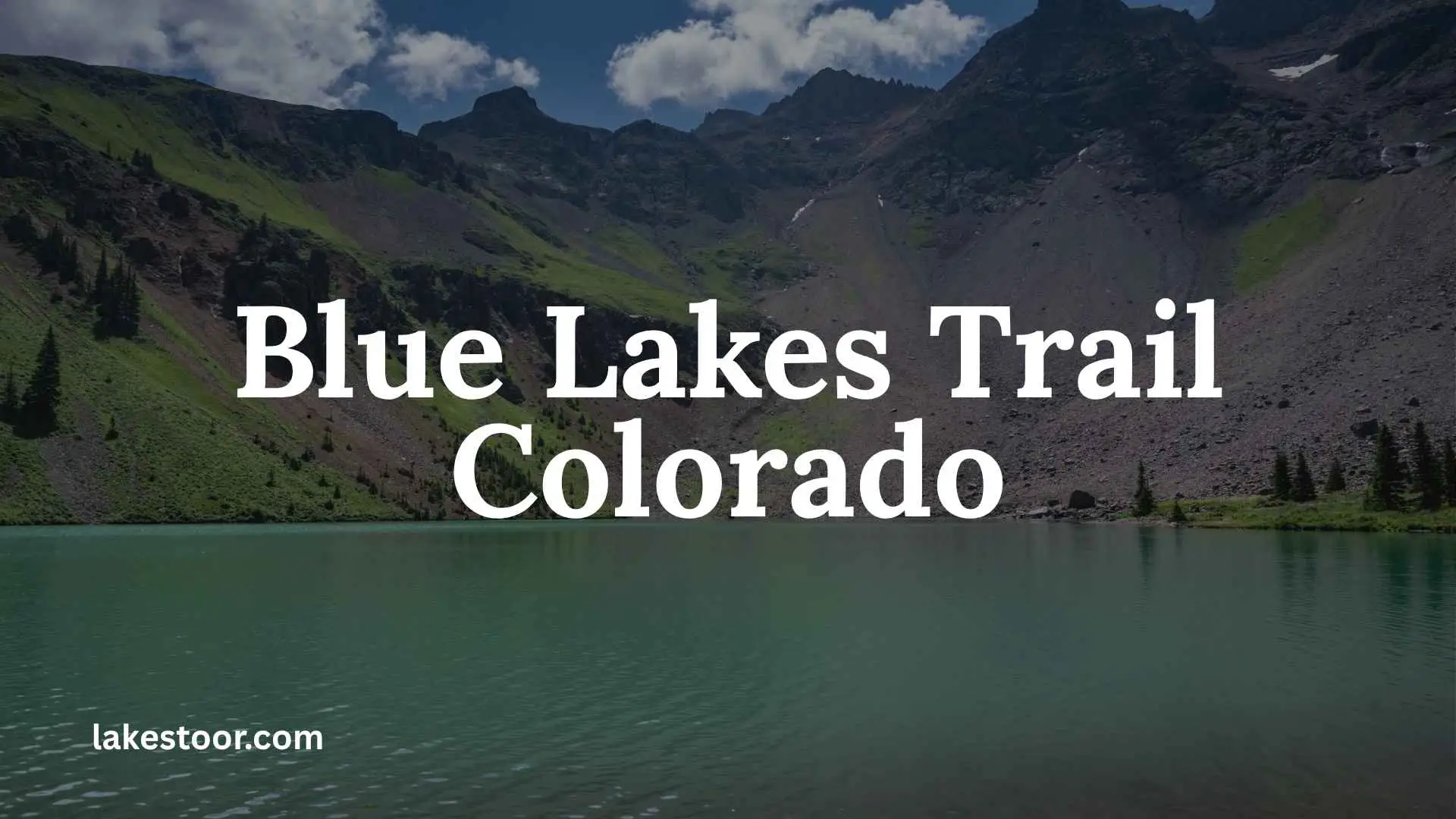
The Blue Lakes Trail Colorado is one of the most spectacular alpine hikes in southwestern Colorado. Located in the Mount Sneffels Wilderness of the San Juan Mountains, the trail leads hikers through forests and steep mountain terrain toward a series of striking blue-green alpine lakes beneath Mount Sneffels.
It is a popular destination for hikers looking for dramatic mountain scenery, wildflowers, photography opportunities, and a classic Colorado high-country experience. However, the trail’s high elevation, changing weather, steep sections, and evolving wilderness regulations mean that good preparation is essential.
As of 2026, the Blue Lakes area is also undergoing significant visitor-management changes. New camping, food-storage, human-waste, and group-size requirements took effect May 31, 2026, while a limited-entry permit system is being developed for future seasons. No day-use or overnight permit fee is currently in place for 2026.
This guide covers the trail’s distance, elevation, difficulty, trailhead access, all three lakes, Blue Lakes Pass, best time to visit, parking, weather, camping, regulations, what to pack, and practical tips for planning your hike.
Blue Lakes Trail Colorado at a Glance
| Detail | Information |
| Location | Ouray County, southwestern Colorado |
| Mountain range | San Juan Mountains |
| Wilderness | Mount Sneffels Wilderness |
| Trail number | #201 |
| Official COTREX length | 6.25 miles |
| COTREX elevation range | 9,360–13,014 feet |
| Lower Lake route | About 6.2 miles round trip |
| Lower Lake elevation gain | About 1,600 feet |
| Lower Lake high point | About 11,000 feet |
| Difficulty | Moderate to strenuous, depending on destination |
| Trail type | Out-and-back |
| Main attraction | Three alpine Blue Lakes |
| Major landmark | Mount Sneffels |
| Dogs | Allowed on applicable trail sections; check current leash rules |
| Bikes | Not permitted |
| Best season | Summer through early fall |
| 2026 day-use permit | None currently required |
| 2026 overnight permit | None currently required, but camping restrictions apply |
| Current management | USFS Ouray Ranger District |
COTREX officially lists Blue Lakes Trail #201 at 6.25 miles with an elevation range from approximately 9,360 to 13,014 feet. The trail is managed by the USFS Ouray Ranger District and allows hiking but not bicycles or motorized vehicles.
One important point: different hiking resources use “Blue Lakes Trail” to describe different endpoints. A hike to Lower Blue Lake is shorter and easier than continuing to the upper lakes or Blue Lakes Pass, so always check which destination the mileage refers to.
Where Is Blue Lakes Trail in Colorado?
Blue Lakes Trail is located in Ouray County in southwestern Colorado, within the San Juan Mountains and Mount Sneffels Wilderness.
The trail is commonly accessed from the Ridgway/Ouray area and provides access to the Blue Lakes basin beneath Mount Sneffels.
The setting is particularly dramatic because the trail climbs from a forested mountain environment into open alpine terrain surrounded by rugged peaks.
The nearest communities that hikers commonly use as bases are:
- Ouray
- Ridgway
- Telluride
The trailhead is remote compared with an urban Colorado hiking destination, so plan your food, fuel, water, navigation, and accommodation before driving into the area.
Why Is Blue Lakes Trail So Popular?
The appeal of Blue Lakes is the combination of several things that hikers usually have to travel to different destinations to experience.
You get:
- High-alpine lakes
- Mount Sneffels views
- Dramatic San Juan Mountain scenery
- Wildflowers during the summer
- Fall color later in the season
- A challenging but achievable mountain hike
- Opportunities to continue toward higher terrain
The three Blue Lakes sit within a dramatic mountain basin, creating a landscape that is particularly impressive on clear mornings.
Blue Lakes Trail Distance and Elevation Gain
Distance depends on where you turn around.
For the commonly described Lower Blue Lake hike, many trail guides give approximately 6.2 miles round trip with around 1,600 feet of elevation gain, while the official COTREX listing gives a total trail length of 6.25 miles and an elevation range extending to 13,014 feet.
A useful way to think about the different objectives is:
| Destination | Approx. Round Trip | Approx. Elevation Gain | Difficulty |
| Lower Blue Lake | 6.2 miles | 1,600 ft | Moderate |
| All three lakes | 7.5–8.5 miles | About 2,100 ft | Moderate–Hard |
| Blue Lakes Pass | About 10 miles | About 3,600 ft | Strenuous |
The figures for the upper lakes and pass vary by exact route and turnaround point, so use them as planning estimates rather than guaranteed measurements.
How Hard Is Blue Lakes Trail?
The answer depends heavily on how far you go.
Lower Blue Lake
For an experienced hiker, the Lower Blue Lake route is challenging but manageable.
The main difficulty comes from:
- Approximately 1,600 feet of climbing
- High starting elevation
- Rocky terrain
- Sustained uphill sections
- Altitude above 10,000 feet
- Potential heat and intense sun
- Afternoon thunderstorms
A typical hiking guide estimates around five hours for the approximately 6.2-mile Lower Blue Lake route, including the slower pace that often comes with altitude.
Beginners should not judge the hike solely by mileage. A six-mile hike at high elevation can feel much harder than the same distance at low elevation.
All Three Lakes
Continuing beyond Lower Blue Lake makes the hike more demanding.
You gain additional elevation and spend more time in exposed alpine terrain. If you are unfamiliar with high-altitude hiking, Lower Blue Lake can be a sensible turnaround point.
Blue Lakes Pass
Blue Lakes Pass is a substantially more serious objective.
The route climbs toward approximately 13,000 feet and requires considerably more endurance and experience. It should not be treated as simply a small extension of the Lower Lake hike.
Blue Lakes Trail: What the Hike Is Like
The route changes considerably as you gain elevation.
Trailhead to the Lower Section
The hike begins at high elevation, so your body is already working harder than it would at sea level.
The early portion travels through mountain vegetation and gradually gains elevation.
Take your time here. Starting too fast is one of the easiest ways to make the upper portion unnecessarily difficult.
Climbing Toward Lower Blue Lake
As the trail climbs, the surrounding scenery becomes increasingly open.
You begin getting broader views of the surrounding San Juan Mountains, while the terrain becomes more rugged.
This is where the elevation gain becomes noticeable.
Lower Blue Lake
Lower Blue Lake is the primary destination for many day hikers.
The combination of blue-green water, surrounding peaks, rocky slopes, and Mount Sneffels makes it an excellent place to stop for a snack and enjoy the scenery.
Do not assume reaching the first lake means you must continue. If weather is deteriorating, you are tired, or you started later than planned, Lower Blue Lake can be a perfectly good turnaround point.
Middle Blue Lake
Hikers continuing beyond the lower lake enter increasingly high-alpine terrain.
The Middle Lake offers a different perspective on the surrounding mountains and gives stronger hikers an opportunity to explore deeper into the basin.
Upper Blue Lake
Upper Blue Lake takes you farther into the mountain basin and closer to the higher terrain surrounding Mount Sneffels.
This section requires more effort than simply visiting Lower Blue Lake, so allow additional time for climbing, photography, food stops, and the return journey.
Also Check This Post: Blue Lakes Trail Colorado: Complete Hiking Guide, Trailhead, Distance, Difficulty & 2026 Tips
Blue Lakes Pass and Mount Sneffels
Blue Lakes Pass is an advanced extension for hikers looking for a higher objective.
The pass reaches approximately 13,000 feet, making it a very different experience from the standard Lower Blue Lake hike.
Mount Sneffels is one of the defining peaks in the area, and the Blue Lakes basin provides impressive views of the mountain.
However, seeing Mount Sneffels does not mean you are climbing Mount Sneffels. Mount Sneffels itself is a separate, more technical mountain objective and should be planned independently.
If your goal is simply to enjoy the lakes and mountain scenery, there is no need to turn the outing into a summit attempt.
How Long Does Blue Lakes Trail Take?
For Lower Blue Lake, plan for roughly 4–6 hours for many hikers, with around five hours being a reasonable general estimate for the complete outing when stops are included.
Your actual time depends on:
- Fitness
- Altitude acclimatization
- Trail conditions
- Photography stops
- Crowds
- Weather
- Whether you continue beyond Lower Blue Lake
If you plan to visit all three lakes or Blue Lakes Pass, allow substantially more time.
Do not plan the hike so tightly that you have to descend in darkness if conditions change.
How to Get to the Blue Lakes Trailhead
The trailhead is reached through the Dallas Creek area near Ridgway.
The final approach is a mountain-road experience rather than a simple paved-road drive. Conditions can change with rain, snow, mud, and maintenance.
For navigation, use the exact trailhead rather than simply searching for “Blue Lakes Colorado,” because multiple Colorado destinations use similar names.
The official COTREX system identifies separate northern and southern Blue Lakes trailhead locations. The Northern Trailhead currently lists bathrooms but no water, while the Southern Trailhead lists neither bathrooms nor water.
That makes it important to arrive prepared.
What Is the Blue Lakes Trail Road Like?
The access road can be rough and conditions can change quickly.
Before leaving, check:
- Current Forest Service alerts
- Road conditions
- Weather
- Construction or restoration activity
- Trailhead status
Do not rely on a trail report from several years ago.
The area underwent major trailhead and parking reconstruction, and the Forest Service’s visitor-management work continues in 2026.
Parking at Blue Lakes Trail
Parking is an important consideration because Blue Lakes is a popular destination.
The trailhead infrastructure was reconstructed as part of a multi-phase visitor-management project. The 2025 phase included parking and trailhead improvements, a new restroom, and restoration work around Lower Blue Lake.
Even with improved infrastructure, summer weekends can be busy.
The safest approach is to:
- Arrive early.
- Park only in designated areas.
- Never block roads or access routes.
- Follow posted signs.
- Respect restoration areas and temporary closures.
Do You Need a Permit for Blue Lakes Trail in 2026?
This is one of the most important current questions.
No Blue Lakes day-use or overnight permit fee is currently in place for 2026, and the Forest Service says permits will not be required before 2027. However, the area is moving toward a limited-entry permit system, with implementation anticipated for a future peak season.
Because this policy is changing, hikers planning a future trip should check the latest official Forest Service information rather than relying on an older article.
New Blue Lakes Camping Rules for 2026
Several important Mount Sneffels Wilderness requirements took effect on May 31, 2026.
Visitors must:
- Pack out human waste.
- Use approved bear-resistant food storage.
- Keep overnight groups to six people or fewer.
- Follow current camping restrictions.
- Avoid camping at Middle and Upper Blue Lakes.
Overnight dispersed camping at Lower Blue Lake remains available in 2026, but space is limited and some areas are temporarily closed or cordoned off for restoration.
Camping also needs to be at least 100 feet from trails and water, and campfires are prohibited in the relevant Blue Lakes/Dallas Creek wilderness area.
Can You Camp at Blue Lakes?
Yes, overnight dispersed camping at Lower Blue Lake remains available in 2026, but hikers should not expect unlimited campsite availability.
Camping at Middle and Upper Blue Lakes is not allowed under the 2026 rules.
If you are planning an overnight trip, have a backup plan. Restoration work has reduced available camping areas, and the rules are evolving as the Forest Service manages increasing visitor pressure.
Can You Have a Campfire?
Do not plan on having a campfire.
Campfires are prohibited in the Blue Lakes-Dallas Creek drainage under the applicable wilderness rules.
If camping, plan to cook using an appropriate stove and follow all current fire restrictions.
Are Dogs Allowed on Blue Lakes Trail?
Dogs are allowed on applicable portions of Blue Lakes Trail, with leash requirements applying according to current trail regulations.
COTREX currently lists the trail as allowing dogs and identifies leashed access on portions of the route.
If you bring a dog:
- Carry sufficient water.
- Keep the dog controlled around wildlife.
- Pack out dog waste.
- Watch for overheating and exhaustion.
- Check current wilderness regulations before your trip.
High-altitude terrain can be hard on dogs just as it can be on people.
Best Time to Hike Blue Lakes Trail Colorado
The best time depends on your priorities.
Late June and Early July
Snow can still remain at higher elevations, and conditions can vary significantly.
The trail may be muddy or partially snow-covered depending on the year’s snowpack.
July and August
These are among the most popular months.
Advantages include:
- Better snow-free access
- Alpine wildflowers
- Longer daylight
- Generally favorable hiking conditions
The disadvantages are crowds and the possibility of afternoon thunderstorms.
September
September can be an excellent time to visit.
You may experience:
- Cooler temperatures
- Fewer visitors
- Golden fall vegetation
- Crisp mountain air
- Beautiful views
However, early-season winter weather can return quickly at high elevations.
October and Later
Conditions become much less predictable.
Snow, ice, shorter daylight, and road conditions can make the hike considerably more difficult.
For most casual visitors, summer and early fall are the most practical seasons.
Blue Lakes Trail Weather and Lightning Safety
Weather deserves serious attention.
High-elevation Colorado storms can develop rapidly during summer afternoons.
The safest strategy is to start early and monitor the weather throughout your hike.
If thunderstorms begin building:
- Avoid exposed ridges.
- Do not continue toward higher objectives.
- Leave exposed alpine terrain.
- Turn around early rather than waiting for conditions to worsen.
Remember that the weather at the trailhead can be very different from conditions several thousand feet higher.
Also Check This Post: Cascade Lakes Scenic Byway: Complete Guide to the Route, Lakes, Stops, Hiking, Camping & Road Trip Tips
Altitude at Blue Lakes Trail
Altitude is one of the most overlooked challenges.
The trail begins around 9,000 feet and reaches substantially higher terrain. COTREX lists an elevation range extending from approximately 9,360 to 13,014 feet.
Visitors coming from lower elevations may notice:
- Faster breathing
- Increased fatigue
- Headache
- Reduced hiking speed
- Dehydration
Do not try to “push through” serious altitude symptoms.
If you feel significantly unwell, descend and seek appropriate help.
A slower pace is normal at high elevation.
What to Pack for Blue Lakes Trail
A good packing list should reflect both the distance and the altitude.
Essential Day-Hike Gear
Bring:
- Plenty of water
- Food and high-energy snacks
- Sturdy hiking shoes or boots
- Rain shell
- Warm insulating layer
- Sun hat
- Sunglasses
- Sunscreen
- Navigation tools
- First-aid supplies
- Headlamp
- Phone with offline maps
- Extra clothing
- Emergency communication device if available
Trekking poles can also be useful for the climb and especially for the descent.
Water
Bring enough water for the entire hike.
The official COTREX trailhead listings indicate that water is not provided at the Northern or Southern Blue Lakes trailheads.
If you plan to collect natural water, use an appropriate filtration or purification method rather than assuming mountain water is safe to drink untreated.
Is Blue Lakes Trail Good for Kids?
That depends on the child’s hiking experience.
The Lower Blue Lake route is not an easy family stroll. The elevation gain and high altitude can make the hike challenging for younger children.
Families with experienced older children may find it manageable in good weather, but parents should consider:
- Elevation
- Distance
- Weather
- Water availability
- Child’s hiking experience
- Emergency turnaround options
For inexperienced young hikers, there are easier Colorado trails that may provide a better introduction to high-altitude hiking.
Blue Lakes Trail Wildlife
The San Juan Mountains support a variety of wildlife.
You may encounter animals such as:
- Marmots
- Pikas
- Deer
- Elk
- Mountain goats
- Black bears in the broader region
Never feed wildlife.
Keep your distance, secure food properly, and follow current bear-resistant storage requirements when camping.
The new 2026 rules specifically require approved bear-resistant food storage for applicable overnight use.
Photography at Blue Lakes
Blue Lakes is particularly attractive for photographers.
For the best conditions:
- Start early.
- Look for calm water.
- Use morning light.
- Include Mount Sneffels in wider compositions.
- Photograph wildflowers without stepping into fragile vegetation.
- Allow enough time to return before afternoon storms.
The color of the lakes can change depending on sunlight, weather, season, and viewing angle, so do not expect every photograph online to represent the exact conditions you will see.
Blue Lakes Trail vs. Blue Lake Near Telluride
Another important source of confusion is the difference between Blue Lakes and Blue Lake.
The Blue Lakes Trail discussed here leads to the three-lake basin beneath Mount Sneffels in the Ouray County area.
There is also a separate Blue Lake destination associated with Telluride and Bridal Veil Falls.
When planning your trip, verify the exact trailhead and coordinates so you do not navigate to the wrong destination.
Blue Lakes Trail vs. Ice Lake Basin
Both destinations are famous San Juan Mountain hikes, but they offer different experiences.
Blue Lakes Trail is particularly appealing if your priority is:
- Mount Sneffels scenery
- Three alpine lakes
- High-country photography
- A classic Ouray-area hike
Ice Lake Basin is another major alpine destination known for dramatic lake colors and mountain scenery.
If you have several days in southwestern Colorado, experiencing both can make an excellent hiking-focused trip.
Where to Stay Near Blue Lakes Trail
The closest practical communities for a hiking trip include Ouray and Ridgway, while Telluride is another popular base for exploring the broader San Juan Mountains.
Staying nearby has a major advantage: you can reach the trailhead early enough to avoid some crowds and improve your chances of completing the hike before afternoon weather develops.
For a multi-day trip, plan your lodging around your hiking objectives rather than trying to drive long distances immediately before an early mountain start.
Leave No Trace at Blue Lakes
Blue Lakes is experiencing significant visitor pressure, which is one reason the Forest Service is implementing restoration and visitor-management measures.
Help protect the area by:
- Staying on established trails.
- Avoiding fragile vegetation.
- Packing out trash.
- Packing out human waste where required.
- Keeping dogs controlled.
- Never feeding wildlife.
- Following camping restrictions.
- Respecting restoration areas.
- Avoiding illegal campfires.
- Leaving natural objects where you find them.
The goal is simple: leave the basin looking as close as possible to how you found it.
Blue Lakes Trail 2026 Conditions and Management Changes
If you are hiking Blue Lakes in 2026, this is an important year to understand.
The Forest Service’s visitor-use management project is being implemented in phases. Work has included trailhead reconstruction, parking improvements, restoration around Lower Blue Lake, and additional management measures.
The 2026 phase includes:
- New camping requirements
- New food-storage requirements
- Human-waste requirements
- Restoration and trail work
- Development of future permit systems
- Continued management of visitor impacts
The Forest Service anticipates a limited-entry permit system in a future phase, so regulations may be different when you visit in 2027 or later.
Always check the latest official alerts immediately before your trip.
Blue Lakes Trail Safety Checklist
Before leaving, confirm:
- Trail is open.
- Access road is open and suitable for your vehicle.
- Weather is favorable.
- You have enough water.
- You have offline navigation.
- You have rain and warm layers.
- You know your turnaround time.
- You understand current camping regulations.
- You have an emergency plan.
- You have checked current Forest Service alerts.
This small amount of preparation can prevent major problems.
Frequently Asked Questions
How long is Blue Lakes Trail Colorado?
The official COTREX listing gives the trail a total length of about 6.25 miles. The commonly completed Lower Blue Lake route is approximately 6.2 miles round trip.
How difficult is Blue Lakes Trail?
The Lower Blue Lake hike is generally considered moderate to hard because of its approximately 1,600 feet of climbing and high elevation. Continuing to the upper lakes or Blue Lakes Pass makes the outing substantially harder.
How long does Blue Lakes Trail take?
Many hikers take around five hours for the Lower Blue Lake route, although fitness, altitude, conditions, and stops can change the total considerably.
How many lakes are on Blue Lakes Trail?
The main Blue Lakes destination consists of three alpine lakes: Lower, Middle, and Upper Blue Lake.
Can you see Mount Sneffels from Blue Lakes?
Yes. Mount Sneffels is one of the dominant peaks surrounding the Blue Lakes basin and is a major reason the hike is so scenic.
Is Blue Lakes Trail dog-friendly?
Dogs are allowed on applicable sections, with current leash requirements applying. Check the latest COTREX and Forest Service rules before hiking with a dog.
Do you need a permit for Blue Lakes Trail in 2026?
No Blue Lakes day-use or overnight permit fee is currently required in 2026. However, the Forest Service is developing a future limited-entry permit system, so visitors should check current regulations before traveling.
Can you camp at Blue Lakes in 2026?
Overnight dispersed camping remains available at Lower Blue Lake in 2026, but availability is limited. Camping at Middle and Upper Blue Lakes is prohibited under the new 2026 requirements.
Can you have a campfire at Blue Lakes?
No. Campfires are prohibited in the Blue Lakes-Dallas Creek drainage.
What is the best month to hike Blue Lakes Trail?
July, August, and September are generally the most practical months, although conditions vary by year. Summer provides better access and wildflowers, while September can offer cooler weather and fall color.
Is Blue Lakes Trail worth visiting?
Yes, especially if you enjoy alpine lakes and dramatic mountain scenery. The combination of three lakes, Mount Sneffels views, high-country terrain, and San Juan Mountain scenery makes it one of the region’s standout hikes.
Final Thoughts
The Blue Lakes Trail Colorado is much more than a hike to a scenic lake. It is a high-altitude mountain experience with three alpine lakes, dramatic views of Mount Sneffels, wildflowers, rugged terrain, and the distinctive scenery of the San Juan Mountains.
For a first visit, the Lower Blue Lake route is the most practical objective for many hikers. Stronger and more experienced hikers can continue toward the upper lakes or consider Blue Lakes Pass, provided weather, trail conditions, fitness, and experience are appropriate.
The most important thing in 2026 is to plan around the area’s changing management rules. Check current Forest Service alerts, understand the new wilderness requirements, start early, prepare for rapidly changing weather, carry sufficient water, and respect restoration areas.
With the right preparation, Blue Lakes can be one of the most memorable hiking destinations in southwestern Colorado.
Also Check This Post: Big Pine Lakes Trail: Complete Hiking, Backpacking, Permit, Route and Planning Guide

Hi, I’m Henry Ashford, a writer with a lifelong interest in lakes, landscapes, and the natural environment. I love exploring how lakes influence wildlife, local communities, tourism, and history. My goal is to create informative content that encourages readers to appreciate and protect freshwater environments.
Every article I write is based on careful research and presented in a straightforward, engaging style that makes learning enjoyable.
Books I’ve Written:
- Discovering the World’s Great Lakes
- Freshwater Landscapes: Stories from Around the Globe
 Oliver Whitmore
 Charlotte Pembroke